

If you’ve ever looked at your back garden and thought about adding a kitchen extension, converting your loft, or even building a modest outbuilding, you’ve probably asked yourself the same question pretty quickly: do I need planning permission for this? For many local planning permission UK homeowners face is one of the most confusing parts of any building project. The rules aren’t always obvious, the jargon is considerable, and the consequences of getting it wrong can be costly.
This guide cuts through the bureaucratic fog. Whether you’re eyeing a single-storey rear extension in a terraced house in Salford or planning a full loft conversion in a semi-detached in Exeter, here’s what you actually need to know.
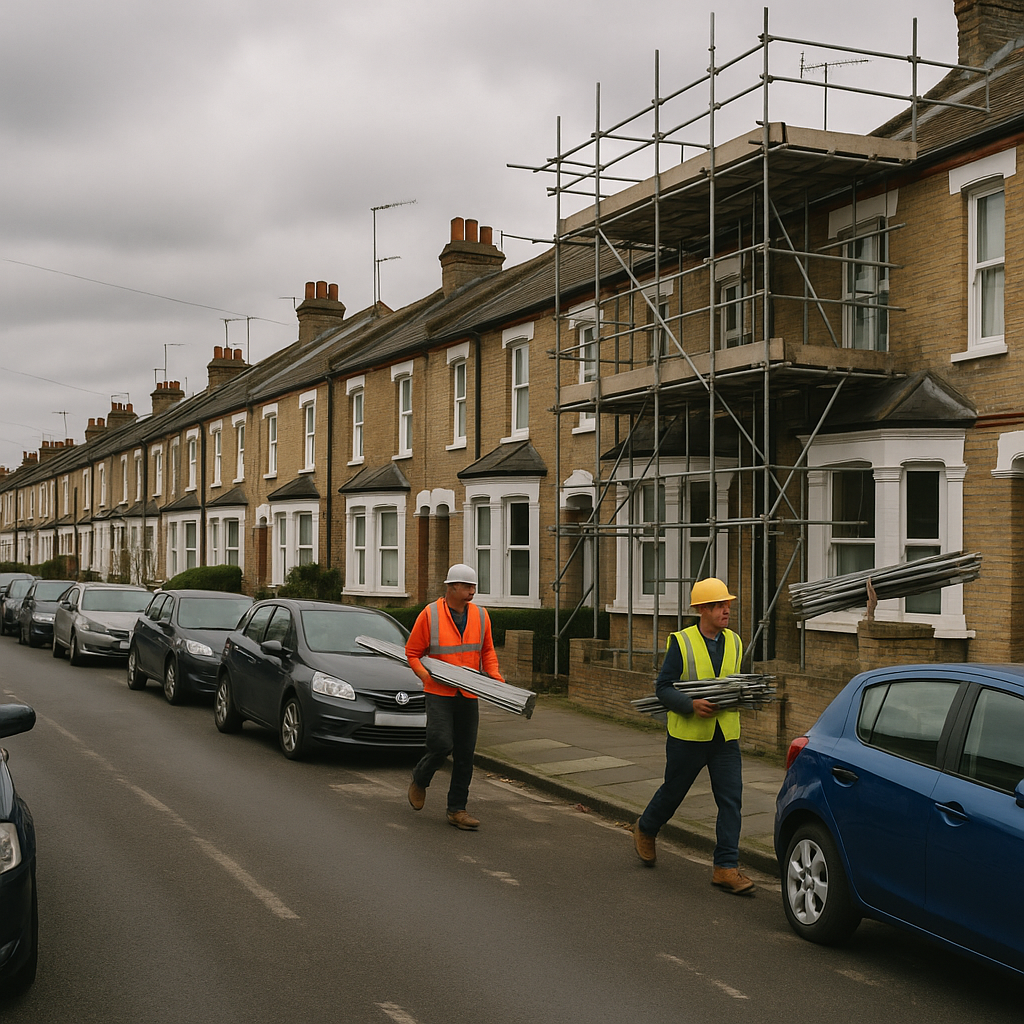
What Is Planning Permission and When Do You Need It?
Planning permission is formal approval from your local planning authority (LPA), typically your district or borough council, to carry out certain types of building work. Not every project needs it. England, Scotland, Wales, and Northern Ireland each operate slightly different systems, so if you’re outside England, always check the devolved rules first.
In England, a significant amount of common home improvement work falls under what’s known as permitted development rights. These are pre-approved categories of work that don’t require a full application, provided your project stays within set limits. A single-storey rear extension, for example, can extend up to 4 metres on a detached house (or 3 metres on any other) under permitted development, as long as it doesn’t exceed the original roof height or cover more than half the garden area.
However, permitted development rights can be removed. If you live in a conservation area, a National Park, an Area of Outstanding Natural Beauty, or in a property covered by an Article 4 Direction, your permitted development rights may be restricted or removed entirely. Listed buildings require listed building consent for almost any structural work, full stop.
Common Projects and Whether They Typically Need Permission
Let’s be direct about the most common scenarios:
- Single-storey rear extensions: Often permitted development within size limits. Check the specific measurements for your property type.
- Loft conversions: Usually permitted development if you’re adding less than 40 cubic metres on a terraced house (50 cubic metres on a detached or semi-detached), and the roof doesn’t extend beyond the existing ridge line.
- Garage conversions: Generally do not require planning permission if the work is internal, though building regulations will still apply.
- New builds and self-builds: Almost always require full planning permission. This is non-negotiable.
- Outbuildings and sheds: Permitted development for buildings under a certain height and footprint, but not if they sit forward of the principal elevation or in a conservation area.
- Side extensions and two-storey extensions: Far more likely to require full planning permission, particularly if they extend beyond the side elevation of the original house.

How to Apply for Local Planning Permission
If your project does require permission, the process runs through the Planning Portal (planningportal.co.uk), which is the government-backed gateway for submitting applications in England and Wales. Most LPAs now require digital submissions, though some still accept paper forms for minor applications.
Here’s the basic sequence:
- Check your local plan. Your council’s local development plan sets out what types of development are encouraged or restricted in your area. It’s publicly available on your council’s website.
- Consider a pre-application consultation. Many councils offer a paid pre-application advice service. It costs money (typically £50 to £200 for a householder enquiry) but can save considerable time and stress by flagging problems before a formal application.
- Prepare your documents. A standard householder application requires existing and proposed floor plans, site plans, elevation drawings, and a completed application form. Complex projects may need a design and access statement.
- Pay the fee. As of 2026, a householder application in England costs £258. New build applications are calculated per dwelling.
- Wait for a decision. The statutory target is eight weeks for householder applications, thirteen weeks for larger projects. Many LPAs are currently under significant pressure on staffing, so delays are common.
You can track application progress through your council’s public planning register. Neighbours are notified and can submit comments, as can local parish councils and statutory consultees such as Highways England or Natural England depending on the nature of the work.
What Happens If You Build Without Permission?
Building without the necessary permission is a serious risk. Your local authority can issue an enforcement notice requiring you to undo the work at your own expense. There’s a four-year time limit for enforcement action on most operational development (meaning if the building has stood for four years without challenge, the council’s enforcement powers lapse), but this is not a loophole worth gambling on. Mortgage lenders and conveyancers will spot missing permissions when you come to sell, and retrospective applications are not guaranteed to succeed.
For full guidance on enforcement and appeals, the Planning Inspectorate’s official guidance is available at gov.uk/guidance/appeals.
Where Timber, Joinery, and Construction Materials Fit In
Once permission is granted, the real work begins, and that’s where the quality of your materials and craftsmanship becomes central. Extensions, new builds, and loft conversions all involve substantial timber framing, joinery work, and bespoke fitting. Carpenters and joiners working on house building projects need reliable, high-quality machinery to produce the structural timbers, staircases, window frames, and fitted furniture that modern construction demands. Based in Newark, Nottinghamshire, International Woodworking Machinery Ltd supplies professional woodworking machinery to carpenters, joiners, and construction firms across the UK, with over 50 years of experience in the trade. Their catalogue at iwmachines.co.uk covers everything from panel saws to spindle moulders, the kind of equipment that sits at the heart of serious joinery workshops supporting the house building sector.
It’s worth noting that the surge in home improvement projects and new builds in recent years has created real pressure on the supply chain for quality joinery work. Tradespeople involved in loft conversions and extensions increasingly rely on well-maintained, professional-grade woodworking machinery to turn around complex carpentry jobs efficiently. International Woodworking Machinery Ltd has built its reputation precisely by supplying that kind of dependable equipment to construction professionals who can’t afford downtime on a live build site.
Tips for Getting Your Application Right First Time
A rejected application costs you time and money, and goes on the public record. A few practical steps improve your chances considerably:
- Use a planning consultant or architect for anything beyond a straightforward rear extension. Their fee pays for itself if it prevents a rejection.
- Talk to your neighbours before submitting. Objections from neighbours carry weight. A simple conversation often prevents formal complaints.
- Check the National Planning Policy Framework (NPPF). This is the overarching document that councils must follow when making decisions. Understanding its language helps you frame your application positively.
- Be honest about your drawings. Inaccurate plans are the single most common reason for delay or rejection.
- Consider a Certificate of Lawful Development if you believe your project is permitted development. This isn’t planning permission, but it’s formal confirmation that you don’t need it, which protects you at sale.
Local planning permission for UK homeowners doesn’t have to be the headache it’s often made out to be. The system has its quirks and its slow patches, but it exists for good reason: to maintain the character of neighbourhoods and protect the interests of everyone living in them. Get the foundations right, and the rest of your project stands a far better chance of going to plan.
Frequently Asked Questions
How do I know if my extension needs planning permission in the UK?
Check whether your project falls within permitted development rights, which allow certain extensions and conversions without a full application. Use the Planning Portal’s interactive guidance tool at planningportal.co.uk to check size limits and restrictions for your specific property type and location.
How much does a planning permission application cost in England?
A standard householder application in England costs £258 as of 2026. Larger projects, such as new builds, are priced per dwelling. Some councils also charge for pre-application advice, typically between £50 and £200 for a householder enquiry.
How long does the local planning permission process take?
The statutory target for a householder application decision is eight weeks. More complex applications involving larger developments have a thirteen-week target. In practice, many councils are currently experiencing delays due to staffing pressures, so build extra time into your project timeline.
What is a Certificate of Lawful Development and do I need one?
A Certificate of Lawful Development (CLD) is formal confirmation from your council that your proposed project is lawful under permitted development rules and doesn’t require planning permission. It’s not compulsory, but it’s strongly advisable to obtain one before selling your home, as conveyancers and mortgage lenders routinely ask for it.
Can a neighbour stop my planning permission application?
Neighbours can submit formal objections during the consultation period, and these are considered by the planning officer. However, an objection alone cannot veto a decision. The council must weigh objections against planning policy, and personal disputes or concerns about property value are not considered material planning considerations.
Leave a Reply