
Tag: local council updates

  • The Best Apps and Websites for UK Local News in 2026

    The Best Apps and Websites for UK Local News in 2026

    Keeping up with what is happening on your own doorstep has never been more important, and thankfully it has never been easier either. Whether you want to know about a planning application going in down the road, your local football club’s Saturday result, or the next community litter pick, there is now a growing range of digital tools built specifically for British residents who want genuinely local information rather than another national headline about Westminster. Here is a look at the best local news apps UK residents are actually using in 2026, along with some honest notes on what each one does well and where it falls short.

    Person reading best local news apps UK on a mobile phone at home in a British terraced house
    Person reading best local news apps UK on a mobile phone at home in a British terraced house

    Why Local Digital News Has Taken Off in 2026

    The shift away from print local newspapers has been well documented. Hundreds of regional titles have closed or gone online-only over the past decade, but what has filled the gap is interesting. Hyperlocal newsletters, community-focused apps, and aggregator platforms have stepped into the breach, and many of them are genuinely good. According to Ofcom’s research on internet use, over 80 per cent of UK adults now get at least some of their news via a smartphone. Local content is a fast-growing slice of that figure.

    People want to know about their bin collection changes, their council tax rises, and whether the new café on the high street is any good. National outlets rarely cover that. So what does?

    Nextdoor: The Social Network That Actually Stays Local

    Nextdoor is probably the most widely used hyperlocal platform in the UK right now. It operates on a postcode-verified basis, which means you genuinely only see posts from people within a short radius of your home. Neighbours share lost pet alerts, warn about dodgy door-to-door traders, recommend tradespeople, and post up road closure information that the council has not yet bothered to publicise properly.

    The app is free, the verification process is straightforward, and coverage is now solid across most of England, Scotland, Wales, and Northern Ireland. It is not a news outlet in the traditional sense, but for raw, unfiltered community information it is hard to beat. The downside is quality control; posts are user-generated, so misinformation does occasionally circulate. Treat it as you would any community noticeboard rather than an authoritative source.

    InYourArea: The Best All-Round Local News Aggregator

    For curated, editorially produced local news, InYourArea is arguably the best local news app UK readers have access to. You enter your postcode, and the platform pulls together content from local newspaper websites, planning portals, Ofsted inspection reports, crime data, and local sports results into a single feed. It covers thousands of communities across the UK and partners with Reach plc titles such as the Manchester Evening News and Birmingham Live, alongside dozens of smaller regional publishers.

    The app is clean and usable. Notifications can be set for specific story types, which is useful if you only really care about planning decisions or crime updates rather than every story going. The free tier is generous, though some partner content sits behind individual publishers’ paywalls. Worth downloading as a first port of call.

    Close-up of a smartphone showing best local news apps UK content with British high street in background
    Close-up of a smartphone showing best local news apps UK content with British high street in background

    Patch and Local Newsletters: The Newsletter Revival

    Email newsletters have made a quiet but significant comeback for local news. Platforms like Substack host hundreds of independent UK local journalists who left regional newsrooms and now publish directly to their readers. Search for your town or borough on Substack and you may well find something. Many are free, funded by a mix of reader subscriptions and occasional sponsorship.

    Separately, a number of councils and local authorities now send out official e-newsletters covering planning notices, road works, and public consultations. These are not exactly gripping reads, but they are primary sources and worth subscribing to. Check your council’s website for a sign-up link. It takes two minutes and it genuinely keeps you ahead of decisions that might affect your street.

    There is also a growing network of local community Facebook groups, which operate in a similar vein to Nextdoor but without the postcode verification. Quality varies wildly by area. Some are excellent; others are argument threads about wheelie bins. Know your local group’s reputation before taking anything posted there at face value.

    The BBC Local News Pages and BBC Sounds

    The BBC remains a significant player in UK local news, though its resources have been stretched. BBC local news pages, accessible via bbc.co.uk/news, are organised by region and cover the main stories from each area. These are editorially produced by trained journalists and are free, which still makes them a reliable baseline.

    BBC local radio, accessible through BBC Sounds, is underrated as a source of community information. Stations like BBC Radio Leeds, BBC WM, and BBC Radio Scotland carry traffic updates, local sports coverage, and breaking community news throughout the day. For older residents or those who prefer audio, it remains one of the most trusted voices in local media.

    Local Sports Results: Where to Find Them Fast

    For non-league football, local cricket, and Sunday league results, the official Football Association’s full-time website and app (FA Full Time) is the go-to. It covers county-level football right down to the Saturday pub league, and results are usually posted within an hour of the final whistle. The interface is functional rather than beautiful, but it does the job.

    For a broader picture of local sport including rugby union, athletics, and cycling, the websites of county sports partnerships are worth bookmarking. These are funded bodies that coordinate grassroots sport across England and hold event listings, results archives, and participation data.

    Planning and Council Announcements: The Tools That Matter Most

    If you want to stay across genuinely consequential local decisions, the single most important thing you can do is set up a planning alert. PlanningAlerts.org.uk emails you whenever a planning application is submitted near your postcode. It is free, takes under a minute to set up, and has saved residents across the country from being blindsided by a proposed development next door.

    Most local councils also have their own planning portals where you can search applications and register to comment. The quality of these portals varies considerably. Some are easy to navigate; others look like they were built in 2003 and have not been touched since. Persistence pays off, though, because these portals are the primary source of information on what is being proposed in your area before it gets reported anywhere else.

    How to Build Your Own Local News Toolkit

    No single app or platform does everything. The most informed local residents tend to layer a few sources: InYourArea or BBC local news for curated headlines, Nextdoor or a local Facebook group for community chatter, a council e-newsletter for official announcements, and PlanningAlerts for anything structural. Add a local Substack if one exists for your area, and you have a genuinely solid picture of what is happening where you live.

    The best local news apps UK residents rely on are the ones that match what you actually care about. Not everyone needs planning alerts. Not everyone cares about non-league football. But the tools exist to build a feed that is specific to your neighbourhood and your interests, and that is a significant improvement on what was available even five years ago.

    Frequently Asked Questions

    What is the best free local news app in the UK?

    InYourArea is widely regarded as one of the best free options, pulling together local news, planning applications, and community updates by postcode. The BBC local news pages are also free and produced by professional journalists, making them a reliable starting point.

    How do I find out about planning applications near me in the UK?

    PlanningAlerts.org.uk sends free email notifications whenever a planning application is submitted near your postcode. Your local council’s planning portal also holds all applications and allows residents to register objections or comments.

    Is Nextdoor available across all of the UK?

    Yes, Nextdoor operates across England, Scotland, Wales, and Northern Ireland. Membership is verified by postcode, so posts are limited to your immediate neighbourhood. Coverage in rural areas can be thinner than in cities, but most towns and suburbs now have active communities on the platform.

    Where can I find non-league and Sunday league football results in the UK?

    The FA Full Time website and app covers county-level and grassroots football results across England, usually updated within an hour of matches finishing. For Welsh, Scottish, and Northern Irish grassroots results, the respective national football associations operate equivalent results services.

    How do I subscribe to my local council's newsletter?

    Visit your local council’s official website and look for a ‘news’, ‘newsletters’, or ‘sign up for updates’ section, usually found in the footer or under a ‘residents’ menu. Most councils in England, Scotland, and Wales offer free e-newsletter subscriptions covering planning, events, and service updates.

  • UK Road and Infrastructure Updates: What’s Being Built or Fixed Near You

    UK Road and Infrastructure Updates: What’s Being Built or Fixed Near You

    Across the country, roads are being resurfaced, rail lines extended, and town centres redesigned. UK local infrastructure projects in 2026 represent one of the largest programmes of regional investment in over a decade, with funding flowing from both central government and devolved authorities into communities that have been waiting years for meaningful upgrades. Whether you live near a planned bypass, a station renewal scheme, or simply a stretch of road that has been riddled with potholes since before anyone can remember, there is more activity underway right now than most people realise.

    Understanding what is happening in your area, who is responsible, and how to have your say is not always straightforward. This guide breaks down the key projects, explains how local works are managed, and tells you exactly how to report issues and stay informed.

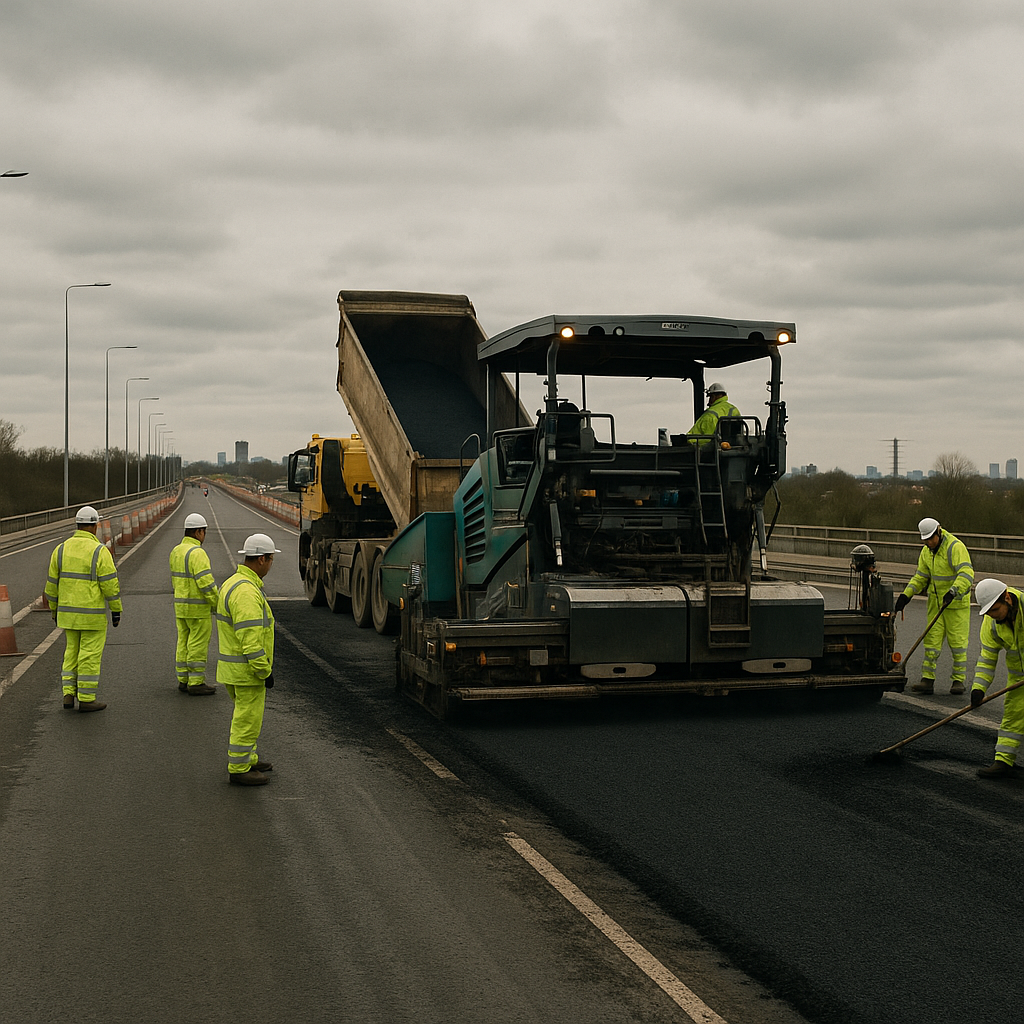
    Construction workers resurfacing a dual carriageway as part of UK local infrastructure projects 2026
    Construction workers resurfacing a dual carriageway as part of UK local infrastructure projects 2026

    Major Road and Transport Schemes Underway Across UK Regions

    National Highways is currently managing several significant schemes on England’s strategic road network. The A303 Stonehenge tunnel project, long contested and legally challenged, remains under review following planning complications, while the A27 improvements in Sussex continue to generate fierce local debate. In the North, work on the Trans-Pennine Route Upgrade, the rail modernisation project linking Manchester and Leeds via Huddersfield, is progressing through 2026 with multiple phases of track and signal upgrades causing planned service alterations throughout the year.

    Scotland’s transport agenda in 2026 is dominated by the Borders Railway Extension feasibility work, and Transport Scotland’s continued programme of trunk road improvements across the Highland network. Wales has invested heavily in active travel infrastructure, with several segregated cycling corridors opening in Cardiff and Swansea as part of the Welsh Government’s ongoing active travel commitments. In Northern Ireland, the A5 Western Transport Corridor dual carriageway, a long-running cross-border project, has moved into a fresh phase of construction south of Strabane.

    What’s Happening With Potholes and Local Road Maintenance

    Potholes remain the single most reported road issue by residents across the UK. Local councils are responsible for maintaining the roads within their boundaries, while National Highways looks after motorways and major A-roads. The distinction matters when you want to report a problem, because sending a complaint to the wrong authority simply delays action.

    If a pothole or damaged road surface is on a residential street, a local B-road, or an unclassified lane, your district or county council is the correct contact. Most councils now offer online reporting tools, many of which include a photo upload function so that highways teams can assess severity without an initial site visit. In England, the government’s online reporting portal allows residents to identify their local authority and submit a fault in minutes. For urgent hazards, such as deep potholes on fast roads or debris blocking carriageways, calling the council’s highways emergency line is the faster route.

    A deep pothole on a UK residential street highlighting the need for local infrastructure projects in 2026
    A deep pothole on a UK residential street highlighting the need for local infrastructure projects in 2026

    How to Find Out About Works Affecting Your Street or Neighbourhood

    The Street Manager platform, operated by the Department for Transport, is perhaps the most useful tool most people have never heard of. It is a national database of all planned and active roadworks across England, updated in near real time by utility companies, councils, and contractors who are legally required to register their works. Residents can search by postcode or road name to see what is planned, when work is expected to start, and who is responsible for it.

    Beyond Street Manager, your local council will typically publish a forward programme of major highway schemes on its website, and many now send residents’ newsletters or operate local social media accounts that flag upcoming road closures and diversions. Signing up to your council’s email alerts is one of the simplest ways to stay ahead of disruption. Planning applications for larger infrastructure changes are also publicly available through your council’s planning portal, and residents have the right to submit observations on any application before a decision is made.

    Rail and Public Transport Improvements: What to Expect Locally

    Network Rail’s Control Period 7 investment programme, running through to 2029, includes station accessibility upgrades at hundreds of locations across Britain. Many of these are smaller schemes, step-free access improvements, better lighting, new waiting facilities, that receive little national press coverage but make a genuine difference to daily commuters and disabled passengers. Your local train operating company’s website will list planned engineering works and improvement projects on routes serving your area.

    Bus networks are also seeing significant reshaping in regions with Mayoral Combined Authorities. Greater Manchester’s Bee Network bus franchising model, which brought local bus services back under public control, is being watched closely by other regions considering similar moves. In areas still operating deregulated bus markets, the new Bus Service Improvement Plans submitted by councils to central government outline local commitments to frequency, reliability, and accessibility.

    How to Have Your Say on Local Infrastructure Plans

    Public consultations are a legal requirement for most significant infrastructure projects, yet participation rates remain stubbornly low. When a major scheme is proposed in your area, the promoter is required to publish details and invite responses. These consultations are often advertised in local papers, on council websites, and through statutory notices posted near the affected area. Engaging at this stage genuinely matters: consultation responses have influenced routing decisions, junction designs, and mitigation measures on projects across the country.

    UK local infrastructure projects in 2026 span everything from resurfaced back streets to billion-pound rail upgrades, and the scale of activity means there is almost certainly something relevant happening close to where you live. Staying informed is easier than it has ever been, and the channels for raising concerns or reporting faults are more accessible than at any point in recent memory. The key is knowing where to look and who to contact when something needs attention in your community.

    Frequently Asked Questions

    How do I report a pothole to my local council in the UK?

    You can report a pothole through your local council’s website, most of which have a dedicated highways fault reporting tool that allows you to pinpoint the exact location on a map and attach photos. For roads managed by National Highways, such as motorways and major A-roads, reports should be submitted directly through the National Highways website or by calling their 24-hour line.

    What is Street Manager and how can I use it to check roadworks near me?

    Street Manager is a government-run platform that records all planned and active roadworks across England. You can search it by postcode or road name to see upcoming works, their expected duration, and which organisation is responsible. It is particularly useful for planning journeys and understanding why certain roads are closed or reduced to single lanes.

    Who is responsible for fixing roads in the UK, councils or the government?

    Responsibility depends on the type of road. Motorways and major A-roads are managed by National Highways, while the vast majority of local roads, residential streets, and B-roads fall under the responsibility of your district or county council. Knowing which authority manages a particular road is important when reporting faults to ensure your report reaches the right team.

    How can I find out about major infrastructure projects planned for my area?

    Your local council publishes forward programmes of major highway and infrastructure schemes on its website, and planning applications for larger projects are visible through the council’s planning portal. You can also sign up for email alerts from your council and check the National Infrastructure Planning website for projects of national significance that require a Development Consent Order.

    Can residents influence decisions about local road and infrastructure projects?

    Yes, public consultations are a legal requirement for most significant infrastructure schemes and residents have the right to submit formal responses. These responses are considered during the decision-making process and have historically influenced design choices, routes, and mitigation measures. Consulting the council’s planning portal or attending public exhibitions held by project promoters are the most direct ways to participate.