Tag: hyperlocal news

  • 10 Ways Local News Keeps Your Town Safer and Better Informed

    10 Ways Local News Keeps Your Town Safer and Better Informed

    There is a reason people still reach for the local paper, check the community Facebook group, or tune into the local radio bulletin. The benefits of local news go well beyond knowing what time the market opens on Saturday. Local reporting touches almost every part of daily life, from whether the roundabout at the end of your road is being widened to whether a sex offender has been convicted in your area. It is, quietly, one of the most practical forms of journalism there is.

    Here are ten concrete ways that staying connected to local reporting can make your town a safer, more informed, and more accountable place to live.

    Local journalist outside a UK town hall illustrating the benefits of local news reporting
    Local journalist outside a UK town hall illustrating the benefits of local news reporting

    1. Crime Alerts Reach Residents Before It Is Too Late

    When a spate of car break-ins hits a particular street, local reporters are often the first to pull together police statements, resident accounts, and the pattern behind the incidents. That information, published quickly, can prompt neighbours to take precautions. National outlets will never cover a burglary on Thornton Lane in Keighley. Local ones will.

    2. Planning Applications Get the Scrutiny They Deserve

    Every week, local councils process applications for new developments, change-of-use requests, and infrastructure projects. Most residents never see them. Local news outlets regularly scan planning portals and flag applications that could affect housing, green spaces, or traffic in a neighbourhood. Without that reporting, a warehouse might be approved behind a housing estate before anyone objects.

    3. Council Decisions Are Held to Account

    Local councillors make decisions about bin collections, road maintenance, licensing hours, and social care budgets. Without reporters sitting in those chamber meetings, those decisions go largely unquestioned. One of the clearest benefits of local news is that it forces elected representatives to justify their choices in public. The Chartered Institute of Journalists has long argued that local reporters remain the most effective check on local government overreach.

    4. Community Events Get the Audience They Need

    A litter pick, a charity fun run, a school’s open day, a new business opening on the high street. These events rely on word getting out. Local news fills that function far more reliably than a flyer put through a letterbox. Communities where local reporting is strong tend to have higher participation in civic and voluntary activity, according to research cited by the BBC and UK media policy bodies alike.

    Printed local newspaper on a kitchen table showing everyday benefits of local news
    Printed local newspaper on a kitchen table showing everyday benefits of local news

    5. Public Health Warnings Travel Faster

    During periods of elevated health risk, whether that is a local outbreak of norovirus at a care home, a water contamination notice, or an air quality warning near a busy junction, local outlets act as a rapid broadcast channel. They translate public health authority statements into plain English and push them to the people who actually need to act on them.

    6. Missing Persons Cases Get Wider Exposure

    Police appeals for missing people, particularly vulnerable adults and children, depend on local reach. A post shared by a regional news site carries far more weight than a generic social media post because it lands in front of the right geographic audience. Several cases across the UK each year are resolved faster because a local outlet picked up and amplified the appeal.

    7. Road and Infrastructure Disruptions Are Flagged in Advance

    Utility works, road closures, burst water mains, bridge weight restrictions. Local reporters have contacts at highways departments and utility companies that most residents simply do not. The practical benefits of local news for daily commuters and business owners are enormous. Knowing a road will be closed for three weeks before it happens, rather than on the morning it shuts, changes how people plan their day.

    8. Local Businesses Get a Fair Platform

    Small retailers, independent restaurants, and tradespeople have almost no advertising budget compared to national chains. Local reporting, whether a feature on a new bakery in the town centre or a story about a family-run garage that has been operating for 50 years, provides coverage that no amount of social media posting can quite replicate. It also helps residents make informed choices about where to spend their money locally.

    9. Residents Are Better Equipped to Vote

    Local elections are won and lost on micro-issues: which ward has had the worst potholes for two years, which councillor voted against the new sports centre, which party has consistently blocked planning appeals. Informed voting at local level requires local information. Without it, turnout drops and incumbents coast through unchallenged. The benefits of local news at election time are especially pronounced in smaller wards where swing margins are tiny.

    10. A Sense of Shared Identity Is Preserved

    This one is harder to quantify but no less real. Towns and neighbourhoods that have active local reporting tend to have a stronger collective identity. People know each other’s names, recognise the issues their community faces, and are more likely to show up when something needs doing. Local news is not just information, it is the connective tissue of a functioning community.

    Why the Benefits of Local News Matter More Than Ever in 2026

    The UK has lost more than 300 local news titles since 2005, according to Press Gazette. That is not an abstract statistic. It means planning applications going unchallenged, council meetings with no reporters present, and crime stories that never get told. Communities that retain strong local reporting are measurably more engaged, better informed, and more capable of holding those in power to account.

    If you have not already, find your local news source, whether that is a community website, a regional paper, or a hyperlocal newsletter, and support it. Read it. Share it. The ten benefits listed above do not happen automatically. They happen because somebody showed up, asked the question, and published the answer.

    Frequently Asked Questions

    What are the main benefits of local news for residents?

    Local news keeps residents informed about crime, planning decisions, road works, public health notices, and council activity that directly affects their daily lives. It also provides a platform for community events and local businesses that national media will not cover.

    How does local news help with community safety?

    Local outlets publish crime alerts, missing persons appeals, and police statements faster than national outlets and in a form that reaches the right geographic audience. This allows residents to take precautions and assist investigations more quickly.

    Is local news declining in the UK?

    Yes. The UK has lost over 300 local titles since 2005, according to Press Gazette data. However, hyperlocal websites, community newsletters, and digital-first regional outlets have emerged in some areas to partially fill the gap.

    How does local reporting hold councils accountable?

    Local journalists attend council meetings, scrutinise planning applications, and report on budget decisions that affect services like bin collections, road maintenance, and social care. Without that presence, many decisions go unchallenged and unnoticed by the public.

    Where can I find reliable local news for my area in the UK?

    You can check regional newspaper websites, local BBC news pages, community Facebook groups, and dedicated hyperlocal sites like Locul. Your local council’s website also publishes agendas, minutes, and planning applications directly.


  • What Is a Local News Desert and Could Your Town Be at Risk?

    What Is a Local News Desert and Could Your Town Be at Risk?

    There is a quiet crisis happening across Britain. Not the kind that makes front pages or leads the evening bulletin, but the kind that unfolds slowly, almost invisibly, until one day you realise the newspaper that once covered your town’s planning rows, magistrates’ court, and school fundraisers simply no longer exists. The term coined for this phenomenon is a local news desert, and the local news desert UK problem is far more widespread than most people realise.

    A local news desert is defined as a geographic area where residents have little or no access to credible, regular, locally focused journalism. No weekly paper. No local radio news team reporting from the council chamber. No reporter turning up to ask why the new housing estate was waved through without adequate road infrastructure. Just silence, where accountability once lived.

    Closed local newspaper office on a British high street, illustrating the local news desert UK crisis
    Closed local newspaper office on a British high street, illustrating the local news desert UK crisis

    How Bad Is the Problem Across the UK?

    The scale of what has been lost is striking. According to research by the Press Gazette and the Reuters Institute for the Study of Journalism at the University of Oxford, the UK lost more than 300 local and regional news titles between 2005 and 2025. That is not just a statistic for media scholars to fret over. It represents the closure of newsrooms in places like Hartlepool, Wrexham, parts of the Scottish Highlands, and swathes of rural Wales, where the nearest surviving local title might now be published 30 or 40 miles away.

    Reach plc, which publishes the Manchester Evening News, the Liverpool Echo, and dozens of other titles, has faced repeated rounds of redundancies. Johnston Press collapsed entirely in 2018, placing titles including The Scotsman and the Yorkshire Post into new ownership under uncertain conditions. Even where titles survive in name, many have been reduced to skeleton editorial teams publishing largely repurposed content, wire copy, or search-engine-optimised articles bearing little relation to genuine community journalism.

    Rural and post-industrial areas tend to suffer most acutely. Research from the Media Reform Coalition has identified large stretches of mid-Wales, County Durham, Lincolnshire, and parts of Northern Ireland as regions where local news provision has shrunk to near-nothing. Urban areas are not immune either. Several London boroughs, particularly in outer east London, have lost their dedicated local papers entirely in the past decade.

    Why Does Local News Die?

    The economics are brutal and fairly well understood. Classified advertising, once the financial backbone of the local press, migrated permanently to platforms like Rightmove, Indeed, and Gumtree in the early 2000s. Display advertising followed readers onto social media. Print circulations fell. Digital revenues never came close to replacing what was lost.

    Ownership consolidation accelerated the decline. When a single regional publisher owns 30 titles and faces financial pressure, the temptation is to slash reporters across the board rather than protect individual newsrooms. A paper that once had eight journalists covering a medium-sized market town might be reduced to one part-time reporter filing three stories a week, most of them press releases lightly rewritten.

    Younger readers, meanwhile, have largely stopped seeking out local titles at all, either in print or online. The BBC’s local news provision, stretched as it is, fills some of the gap, but its editorial remit cannot realistically cover every village hall dispute, every planning application, or every local magistrates’ case that a dedicated local newsroom once tracked.

    Stack of old local UK newspapers representing the decline of local journalism and the local news desert UK problem
    Stack of old local UK newspapers representing the decline of local journalism and the local news desert UK problem

    What Happens to a Town Without Local Journalists?

    This is where the consequences move well beyond media industry statistics and into something that affects daily civic life. Democratic accountability depends, at least in part, on journalism. When no one is watching the council, the council notices.

    Studies in the United States and, more recently, in the UK have found measurable effects in areas that lose local news coverage. Voter turnout in local elections falls. Council spending increases without corresponding scrutiny. Planning decisions that might once have prompted organised public opposition slip through unchallenged. Local authority misconduct goes unreported. Vulnerable residents who once had a local champion, a reporter willing to pursue a story about a housing association or a poorly run care home, lose that voice entirely.

    There is also the social fabric to consider. Local journalism, at its best, tells communities back to themselves. It names the people who win local awards, covers the under-15s football club, reports on the campaign to save the high street library. When that disappears, something less tangible but equally real is lost: a shared sense of what is happening and what matters locally.

    The BBC has itself acknowledged the gap that local news closures leave, and its own local democracy reporters scheme, a partnership with news publishers, was designed specifically to place journalists back inside council chambers. It helps, but it covers only a fraction of what has been lost.

    Are There Any Signs of Recovery?

    There are green shoots, though calling them a recovery would be too strong. Hyperlocal news sites, many run by volunteers or tiny editorial teams, have filled gaps in places like Swindon, Leeds, and Leamington Spa. The membership-funded model, popularised by outlets like the Bristol Cable, offers one possible path forward. Some local authority areas have begun considering public interest journalism funds, though critics rightly flag the independence concerns that come with council-backed news.

    Ofcom’s annual news consumption reports have repeatedly highlighted public appetite for trusted local news, even as commercial provision shrinks. That gap between what people want and what the market currently delivers is significant. It suggests demand exists; the challenge is finding sustainable funding models that do not compromise editorial independence.

    Could Your Town Be at Risk?

    The honest answer is: possibly. If your area is served by a single title owned by a large regional publisher, if that title has reduced its print frequency, if the reporter covering your council is also covering three other councils, the warning signs are there. Rural areas, smaller market towns, and post-industrial communities outside major city centres are statistically most at risk of becoming or deepening into a local news desert.

    Paying attention to what you still have is a reasonable starting point. Supporting independent local journalism, sharing stories, engaging with community news organisations, and pushing local representatives to take the issue seriously all matter. Because once a newsroom closes, it rarely reopens. And the silence that follows is not neutral. It has consequences.

    The local news desert UK crisis is not just a story about struggling media businesses. It is a story about the kind of communities we want to live in, and whether anyone will be there to tell us what is happening inside them.

    Frequently Asked Questions

    What is a local news desert in the UK?

    A local news desert is an area where residents have little or no access to regular, credible local journalism. In the UK, this typically means a town or region where local newspapers have closed and no broadcaster or online outlet has replaced them with meaningful community coverage.

    Which parts of the UK are most affected by local news deserts?

    Research points to mid-Wales, parts of County Durham, rural Lincolnshire, sections of Northern Ireland, and several outer London boroughs as among the worst affected areas. Post-industrial and rural communities tend to lose local press provision faster than major urban centres.

    Why are local newspapers closing across the UK?

    The primary cause is the loss of classified and display advertising revenue to digital platforms, combined with falling print circulations. Ownership consolidation has also led to repeated rounds of redundancies, leaving many surviving titles with only one or two reporters covering large areas.

    Does losing local news actually affect democracy?

    Evidence suggests it does. Areas that lose local journalism tend to see lower turnout at local elections, reduced scrutiny of council decisions, and less public awareness of planning and spending matters. Without reporters in council chambers, accountability mechanisms weaken.

    What is being done to tackle local news deserts in the UK?

    The BBC’s local democracy reporters scheme places journalists inside councils in partnership with surviving publishers. Hyperlocal outlets and membership-funded news organisations like the Bristol Cable offer alternative models. Ofcom continues to monitor the issue, though no comprehensive national funding solution is currently in place.

  • Your Neighbourhood, Your News: How to Find Hyperlocal Stories That Actually Matter

    Your Neighbourhood, Your News: How to Find Hyperlocal Stories That Actually Matter

    Most people scroll through their phones every morning and come away knowing more about what’s happening in Westminster or Washington than they do about the planning application that just went in for the car park at the end of their road. National and international headlines are everywhere. Hyperlocal news, the kind that covers your street, your ward, your school catchment area, is much harder to find, and much more useful in your day-to-day life.

    This isn’t a new problem, but it has become more pressing. Dozens of regional papers have closed or moved to skeleton staffing over the past decade, leaving real gaps in coverage. According to the BBC, so-called “news deserts” now affect substantial parts of the UK, where whole communities go weeks without any meaningful local reporting. The good news is that residents are increasingly finding ways to fill that gap themselves, using a mix of tools, platforms, and good old-fashioned neighbourhood networks.

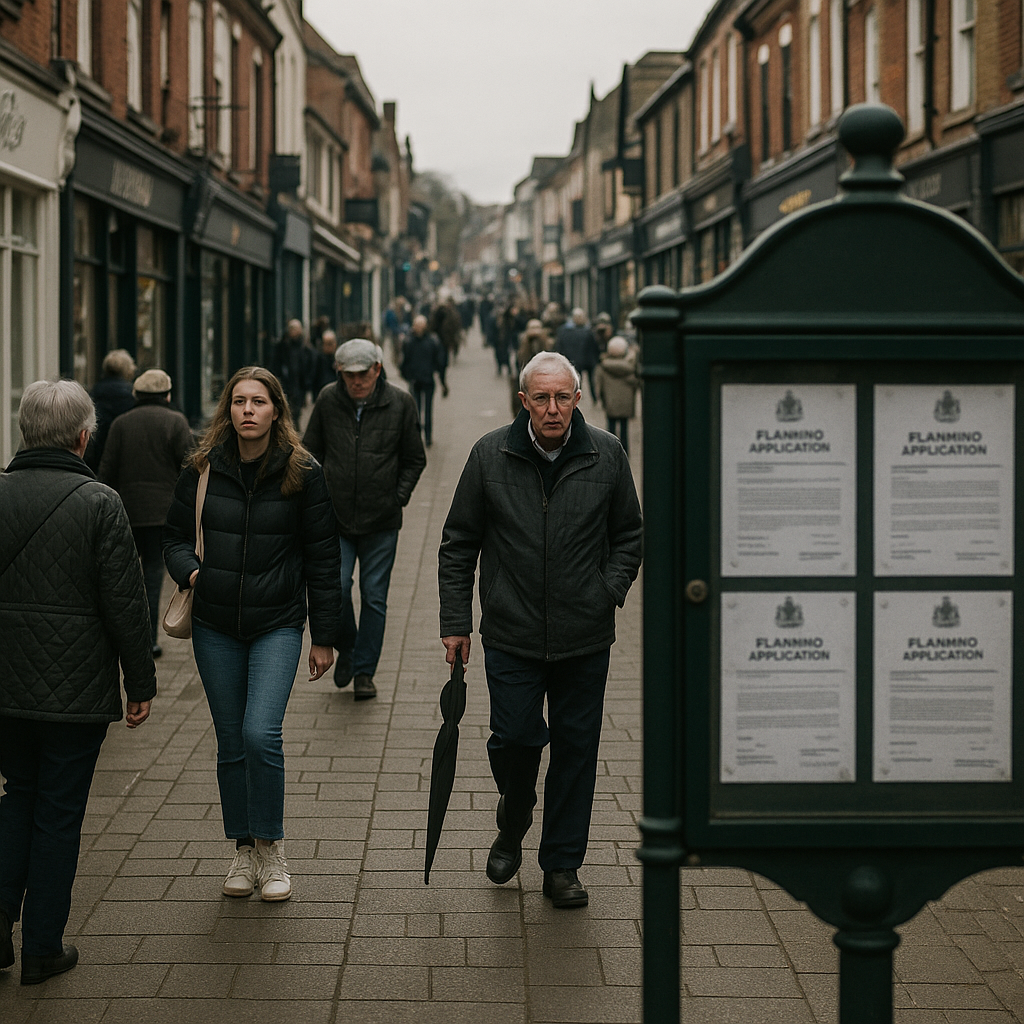
    Residents passing a council notice board on a UK high street, representing the search for hyperlocal news
    Residents passing a council notice board on a UK high street, representing the search for hyperlocal news

    What Hyperlocal News Actually Covers

    It helps to be clear about what we mean. Hyperlocal news isn’t the regional evening bulletin. It’s not the county-level paper either. It’s the stuff that your immediate community produces and consumes: the new planning application for a block of flats on the old pub site; the road closure that’s been extended another three months; the litter-picking group meeting on Saturday morning; the school governors’ decision to change the admissions policy.

    That kind of reporting rarely makes the regional front page. But it affects your commute, your property value, your children’s schooling, and the feel of the place you live in. It deserves attention, and in 2026, more tools exist to help you find it than ever before.

    Start With Your Local Council Website

    It sounds obvious, but your district or borough council’s website is genuinely one of the most information-dense local resources available, and most people never visit it. Council websites publish planning applications, licensing decisions, committee meeting agendas and minutes, and public consultations. Many are updated daily.

    Set aside twenty minutes to explore your council’s planning portal. Most now let you search by postcode and sign up for email alerts when applications are submitted in your area. If a developer wants to convert a community centre into luxury flats near you, this is where you’ll find out first, often weeks before any journalist picks it up.

    Minutes from council committee meetings are also publicly available and frequently contain decisions that affect residents directly. They can be dry reading, but the details matter. A decision about refuse collection routes, a vote on a new local park, an approval for a new primary school intake, these are all logged here.

    Neighbourhood Apps and Online Platforms

    Nextdoor remains the dominant platform for hyperlocal community chat in the UK, connecting you specifically with verified residents in your immediate area. It’s used for everything from lost cat notices to serious debates about antisocial behaviour and planning objections. The quality of information varies enormously depending on how active your local community is, but in well-engaged areas it’s invaluable.

    Facebook Groups have also become surprisingly robust hyperlocal news sources. Most towns and many streets now have active groups where residents share photos of flooding, report road closures in real time, and flag up local business news. Search for your town or village name alongside words like “community”, “residents”, or “news” and you’ll likely find several.

    WhatsApp community groups are harder to find if you’re not already connected, but they tend to be the most immediate and frank. Ask a neighbour or your local councillor whether there’s one for your street or ward.

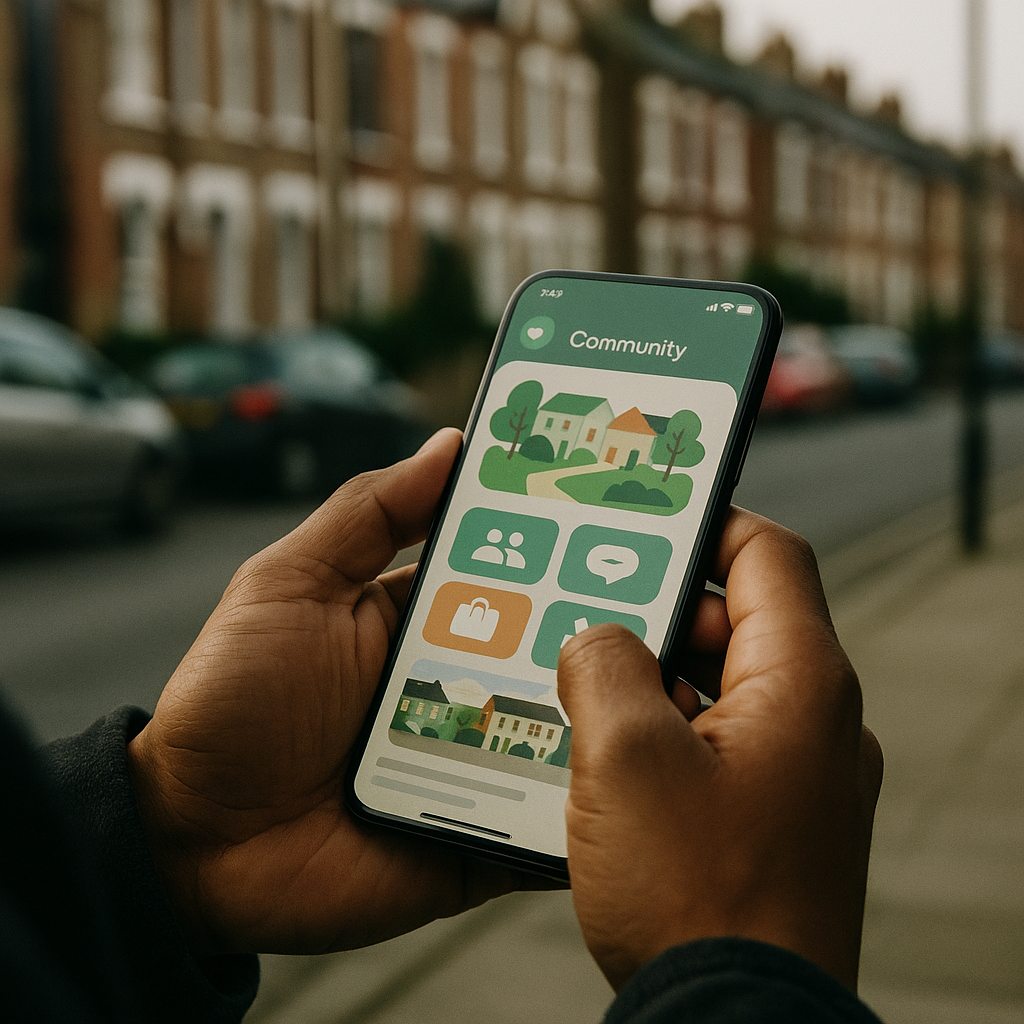
    Person using a neighbourhood app on a mobile phone to find hyperlocal news updates
    Person using a neighbourhood app on a mobile phone to find hyperlocal news updates

    Local Journalism: Where It Still Exists

    Despite the closures, there are still good local journalists working in the UK, and it’s worth seeking them out. Many have moved to independent newsletter formats, publishing directly to subscribers via platforms like Substack or Mailchimp. A quick search for your town name plus “newsletter” or “local reporter” often surfaces something useful.

    In some areas, hyperlocal news sites have emerged to fill the gap left by print papers. These are often run by one or two dedicated local journalists working independently. They don’t always rank highly in search results because they lack the SEO muscle of national publishers, so you may need to seek them out deliberately and bookmark them rather than waiting for the algorithm to surface them.

    Your local library is also still a resource. Many stock or have access to community bulletins, council leaflets, and local newsletters that never make it online.

    Following Local Councillors and Public Officials

    Individual ward councillors are often more connected to local issues than any publication. Most are active on social media, particularly X (formerly Twitter) and Facebook, and many post regularly about local matters. Find out who your ward councillors are on your council’s website and follow them directly. They will flag consultations, comment on planning decisions, and highlight local events that don’t appear anywhere else.

    Similarly, local MPs hold regular surgeries and often publish detailed newsletters about constituency matters. Even if national politics isn’t your focus, their local updates can be genuinely useful for neighbourhood-level intelligence.

    Broadening Your Local Radar

    Life in any community is varied, and hyperlocal stories reflect that. In rural areas, issues around agricultural land use, broadband connectivity, and road maintenance dominate. In market towns, it might be high street vacancy rates or the fate of the local bus service. In urban neighbourhoods, air quality, housing density, and school places are perennial flashpoints.

    Whatever your area, the stories that matter aren’t always dramatic. Sometimes they’re quiet: a new community garden in a derelict plot, a library that’s stayed open thanks to volunteer support, a local business that’s celebrated its fiftieth year. These stories build a picture of place over time, which is exactly what good community reporting does.

    People who are passionate about their local patch tend to know their area deeply, whether they’re litter-picking volunteers, allotment committee members, or enthusiasts with niche interests who’ve spent years exploring it. A neighbour who’s run the local Scout group for fifteen years will know things about the area that no planning database will tell you. And yes, the same applies in plenty of other directions, including the retired farmer who can explain why that particular field always floods, or the local car club member who knows every back lane for miles around and can tell you about the road conditions that affect drivers of Diesel 4x4s in the area.

    Building Your Own Hyperlocal News Feed

    The practical advice here is to curate rather than wait. Set up Google Alerts for your town, village, or postcode area combined with keywords like “planning”, “council”, “funding”, or “closure”. Follow your council’s social media accounts. Join local Facebook and Nextdoor groups. Bookmark any independent local news sites you find. Subscribe to your MP’s and councillors’ newsletters.

    Done properly, this takes about an hour to set up and perhaps fifteen minutes a week to maintain. You’ll start to build a much more accurate, more locally relevant picture of what’s actually happening around you than any national news app can offer.

    Hyperlocal news isn’t glamorous. It doesn’t trend on social media. But it is the information that shapes your daily life, and in 2026, the tools to find it have never been more accessible. The challenge is knowing where to look.

    Frequently Asked Questions

    What is hyperlocal news and how is it different from local news?

    Hyperlocal news covers a very specific geographic area, often a single neighbourhood, village, or ward, rather than a whole region or county. While a regional paper might cover an entire county, hyperlocal news focuses on events, decisions, and stories that affect a small, immediate community directly.

    Where can I find hyperlocal news for my area in the UK?

    Good starting points include your district or borough council’s website, local Facebook Groups, Nextdoor, and independent local newsletters on platforms like Substack. Following your ward councillors on social media is also a reliable way to stay informed about neighbourhood-level issues.

    How do I get alerts when planning applications are submitted near me?

    Most UK council planning portals allow you to register for email alerts using your postcode. Visit your local council’s website and look for the planning search tool; there’s usually an option to save searches and receive notifications when new applications are submitted in your chosen area.

    Are there any free apps for following local community news in the UK?

    Nextdoor is the most widely used app specifically designed for neighbourhood-level updates, and it’s free to use with address verification. Facebook Groups are also widely used for community news and don’t require any additional setup beyond a standard account.

    What has happened to local newspapers in the UK?

    Many local and regional newspapers have closed or significantly reduced their staffing over the past decade due to declining print advertising revenue. The BBC and press bodies such as the News Media Association have reported that large parts of the UK are now underserved by traditional local journalism, which is why community-led and independent hyperlocal sources have grown in importance.