

Knowing what is happening on your own street used to mean chatting over the garden fence or picking up the free paper from the post office. These days, a significant number of UK residents are turning to their phones instead. Neighbourhood apps UK-wide have grown sharply in popularity, and the range of platforms available in 2026 is wider than most people realise. Some are built for community chatter, some for reporting potholes and fly-tipping, and others blur the boundaries between social network, local news feed, and home security tool.
This is a look at the main players, what they actually do well, where they fall short, and which might suit your street best.

Nextdoor: Still the One Everyone Has Heard Of
Nextdoor launched in the UK back in 2016 and remains the most widely recognised platform of its kind. The idea is straightforward: you verify your address, join a virtual neighbourhood, and then exchange posts with people who live within a defined radius. Lost a cat, suspicious car parked outside for three days, a recommendation for a local plumber, a heads-up about roadworks starting on Monday. That is the texture of it.
As of early 2026, Nextdoor claims more than 11 million verified UK members spread across thousands of neighbourhoods. The platform has partnerships with a number of local councils, which means some authorities use it to push out official updates directly to residents. Wiltshire, Essex, and several London boroughs have used it for exactly this purpose.
The criticism that follows Nextdoor around is that it can tip into gossip and, at times, complaints about groups of people that veer into something less comfortable. The platform has updated its moderation policies repeatedly over recent years to address this, including a dedicated anti-racism policy introduced in response to well-documented concerns. Whether those changes have filtered through to every neighbourhood feed is another matter. Worth joining, but worth moderating your own expectations too.
Ring Neighbours: Security First, Community Second
Amazon-owned Ring started as a smart doorbell company and has built a community feature called Neighbours around its hardware. You do not need a Ring device to join, but the app is clearly designed to sit alongside one. Users share video clips, alert each other to incidents, and flag anything that looks out of place.
The appeal is obvious, particularly in areas where residents feel that police response times for low-level crime are stretched. Ring Neighbours gives people a way to pool footage quickly if something happens locally. Several UK police forces have piloted formal data-sharing agreements with Ring, though these have attracted scrutiny from privacy campaigners and the Information Commissioner’s Office (ICO), which has raised questions about how footage is stored and who can access it.
As a pure community connection tool, Ring Neighbours is narrower than Nextdoor. It is mostly crime and security talk. If that is what you want, it does the job. If you are looking for local recommendations or community news, it will feel thin.
FixMyStreet: Report It and Track It
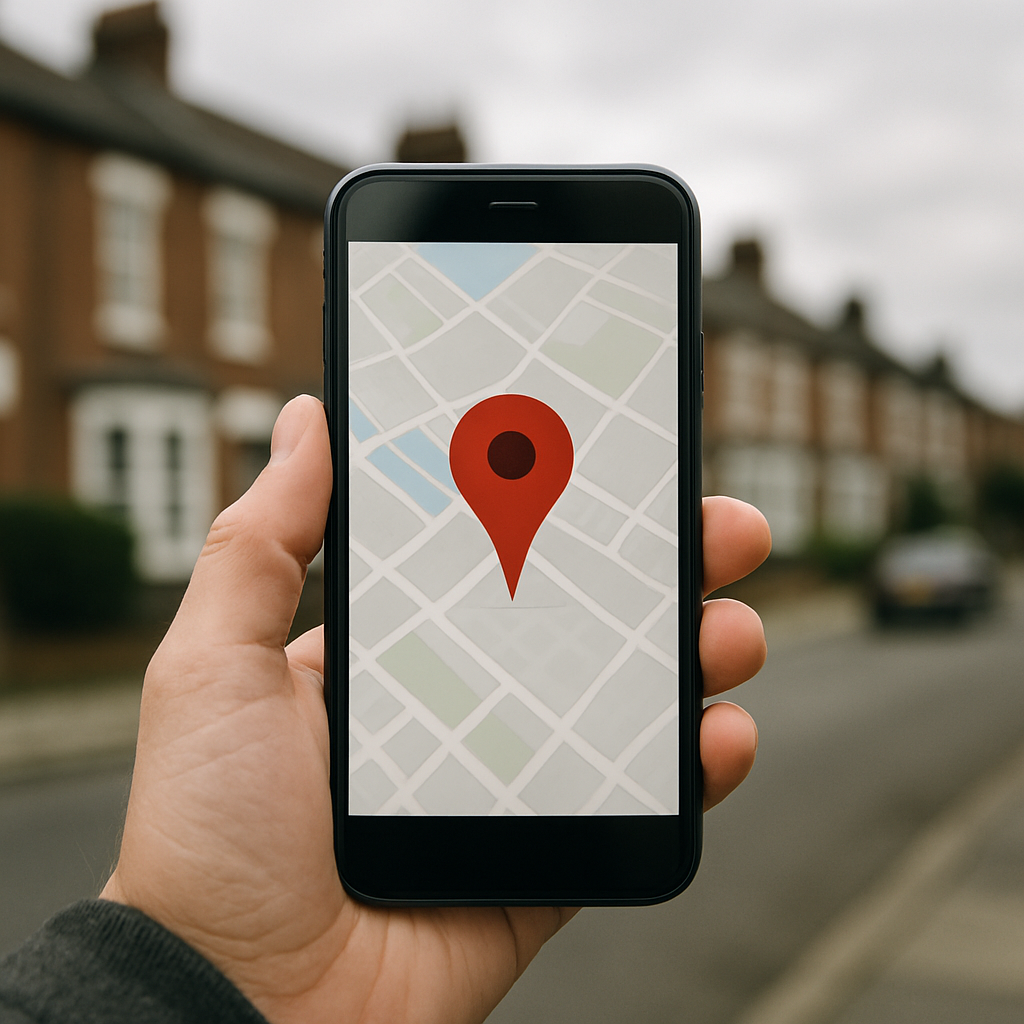
Run by the civic technology charity mySociety, FixMyStreet is one of the most genuinely useful tools available for UK residents who want to report local issues. Potholes, broken street lighting, overgrown hedges blocking pavements, graffiti, abandoned vehicles. You pin the problem on a map, describe it, and the report goes directly to the relevant council team.
What sets it apart from phoning your council is transparency. Every report is publicly visible, so you can see whether your neighbour already logged the same pothole last week, and you can track whether the council has acknowledged or resolved it. mySociety publishes data on council response times, which creates a degree of accountability that a phone call never could.
It is not a social platform in the Nextdoor sense. There is no feed, no chat, no recommendations. But for the specific task of holding local authorities to account over infrastructure and public space, nothing really touches it. Millions of reports have been filed since it launched in 2007.
Facebook Groups: Messy but Massive
No honest roundup of neighbourhood apps UK residents actually use can ignore Facebook Groups. They are enormous. Almost every town, village, and urban district in the country has at least one active group, often several competing ones. Some are tightly run, useful, and active. Others are a rolling argument about parking.
The advantage is reach. If you post something about a local issue in a well-followed Facebook group, you will hear from people quickly. The disadvantage is that Facebook Groups have no identity verification, no address confirmation, and no structured reporting mechanism. They function as community notice boards but with considerably more noise than signal on a bad day.
Many residents use both. Nextdoor for verified local conversation, and a Facebook group for broader reach when they need it.
Emerging Platforms Worth Watching in 2026
A handful of newer tools have been gaining traction this year. Commonplace is one worth mentioning. It is used primarily by local councils and developers to gather community feedback on planning consultations and regeneration projects. If a new housing development or road scheme is being proposed near you, Commonplace is often where you can formally register your view. Several London boroughs and councils in the North West have adopted it as their default consultation platform.
There is also growing interest in WhatsApp-based community groups, which have no central platform at all but function as hyperlocal communication channels for streets, blocks of flats, and small villages. Simple, private, and quick. The limitation is obvious: they are closed, informal, and depend entirely on someone keeping them active.
Which Platform Actually Suits Your Needs?
The honest answer is that most active community residents end up using more than one. Nextdoor for day-to-day neighbourhood conversation. FixMyStreet for reporting council issues. Ring Neighbours if home security is a priority. A local Facebook group for events and wider reach. They serve different purposes and do not really compete directly.
What has changed in 2026 is the expectation. People increasingly assume there will be a digital channel for local communication, whether that is with their neighbours or their council. The tools exist. The question for most communities now is not whether to use them, but which combination works best for a particular street, estate, or village.
If you are new to all of this, FixMyStreet is probably the most immediately practical starting point for anyone who wants to see a tangible result. Nextdoor is the better choice for general community connection. And the gov.uk reporting tool remains the official route for flagging issues with your local authority if you prefer to go direct.
Your street is worth knowing. These platforms make it easier than ever to do exactly that.
Frequently Asked Questions
What are the best neighbourhood apps UK residents use in 2026?
The most widely used are Nextdoor for community conversation, FixMyStreet for reporting council issues, and Ring Neighbours for security-focused alerts. Facebook Groups also remain popular across most towns and villages, despite their lack of address verification.
Is Nextdoor free to use in the UK?
Yes, Nextdoor is free for residents to sign up and use. You verify your address during registration, which keeps the platform limited to genuine local members. Some promoted posts from local businesses appear in the feed, which is how the platform generates revenue.
How do I report a pothole or broken streetlight to my council?
FixMyStreet is the most effective tool for this. You pin the issue on a map, describe it, and the report routes directly to the relevant council department. You can track progress publicly on the site, and all reports are visible to other local residents.
Are neighbourhood apps safe to use from a privacy point of view?
It depends on the platform. Nextdoor requires address verification but does not display your full address publicly. Ring Neighbours has faced scrutiny from the ICO over data-sharing with police forces. It is worth reading each platform’s privacy policy and adjusting your settings accordingly.
Can local councils actually see what I post on Nextdoor or FixMyStreet?
On FixMyStreet, reports are publicly visible and sent directly to the relevant council team, so yes. On Nextdoor, some councils have official accounts and can post into local feeds, but they do not have access to general resident posts unless they are shared with them directly.
Leave a Reply