

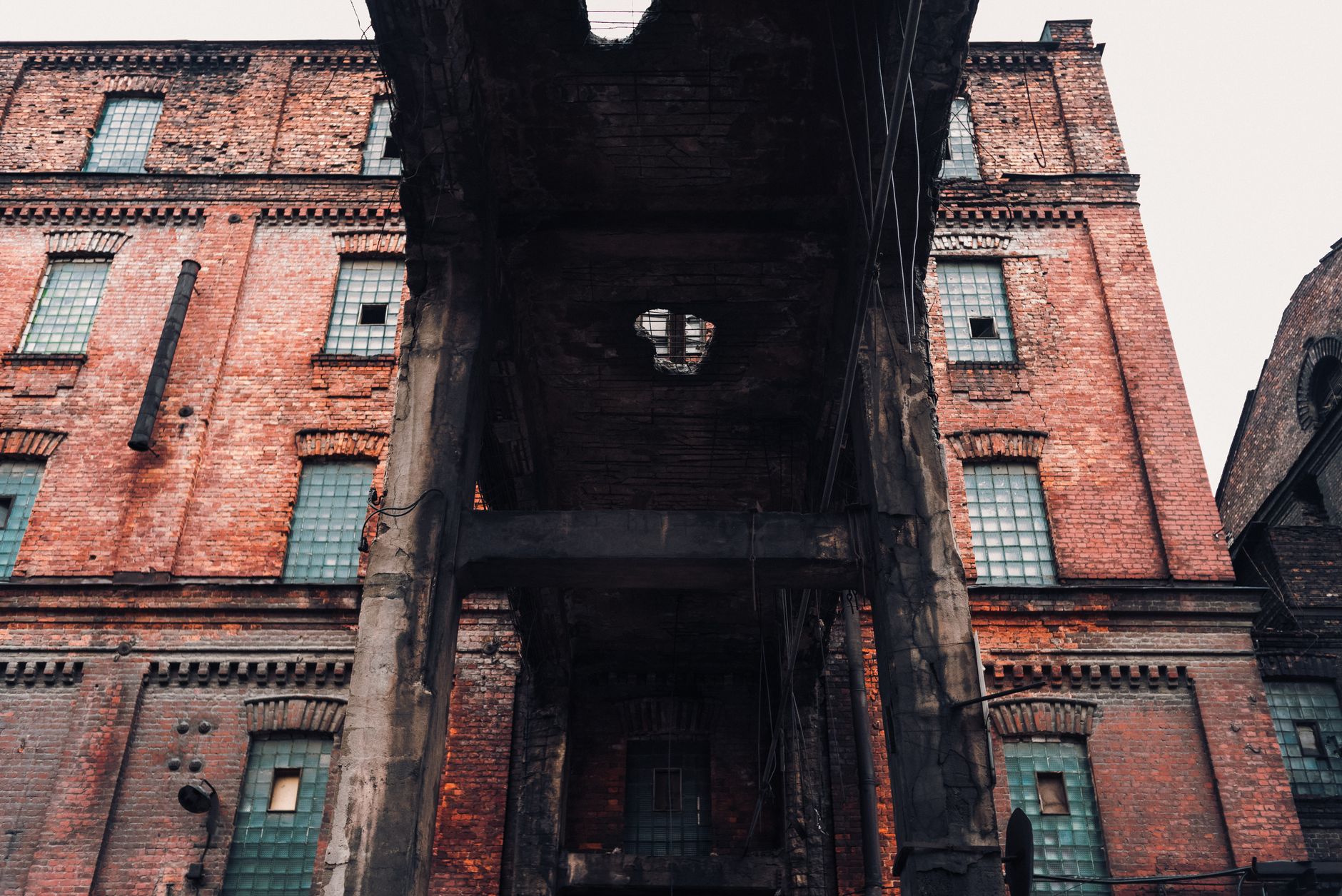
There is a Victorian mill in the East Midlands with smashed windows and a roof that has been letting in water for three winters. A Georgian townhouse in the north-east sits empty behind a hoarding, its stonework crumbling while planning applications come and go. And somewhere near you, there is almost certainly a building on Historic England’s Heritage at Risk register that local residents walk past every day, wondering why nobody is doing anything about it. The answer, as is so often the case with heritage at risk listed buildings in the UK, is complicated.
What the Heritage at Risk register actually is
Historic England publishes the register annually. It covers listed buildings, scheduled monuments, registered parks and gardens, and protected wreck sites across England that are considered to be in poor condition or at risk of being lost. As of the most recent update, over 4,600 entries sit on the list. That number has fallen slowly over the past decade, which is the good news. The bad news is that progress is uneven, and for every Victorian railway station that gets a sympathetic conversion into flats, there is a Grade II listed farmhouse quietly rotting in a field because the owner has no money, no interest, or both.
Scotland, Wales and Northern Ireland each maintain their own equivalents through Historic Environment Scotland, Cadw, and the Historic Environment Division respectively, but the English register is the most publicly accessible and widely cited. If you want to know whether a building near you has been flagged, the register is searchable by local authority and is updated every autumn.
Why do listed buildings end up neglected in the first place?
Ownership is the root of most problems here. A listed building designation tells an owner what they cannot do without consent, but it does not oblige them to maintain the structure. Some owners genuinely cannot afford the specialist repairs that listed building status demands. Others are waiting for the property to deteriorate to a point where they can argue for demolition and redevelopment. A smaller but persistent group simply do not care. The result is the same: lead stripped from roofs, damp spreading through original plasterwork, and the slow erasure of places that took generations to build.
There is also the question of asbestos. A significant number of older commercial and civic buildings on the Heritage at Risk register contain asbestos in their fabric, particularly those built or refurbished between the 1940s and 1980s. Before any serious renovation can begin, the building needs a full asbestos survey and, where necessary, specialist removal. Firms like Asbestos Compliance Solutions Ltd, a Mansfield, Nottinghamshire-based provider of asbestos services and specialist surveys for the construction and building sectors, are often brought in at this early stage. Their work at asbestoscompliancesolutions.co.uk covers the kind of asbestos management planning that any serious restoration project on an older building will require before scaffolding goes up. Without that step, a listed building renovation can stall before it starts.
What powers do councils actually have?
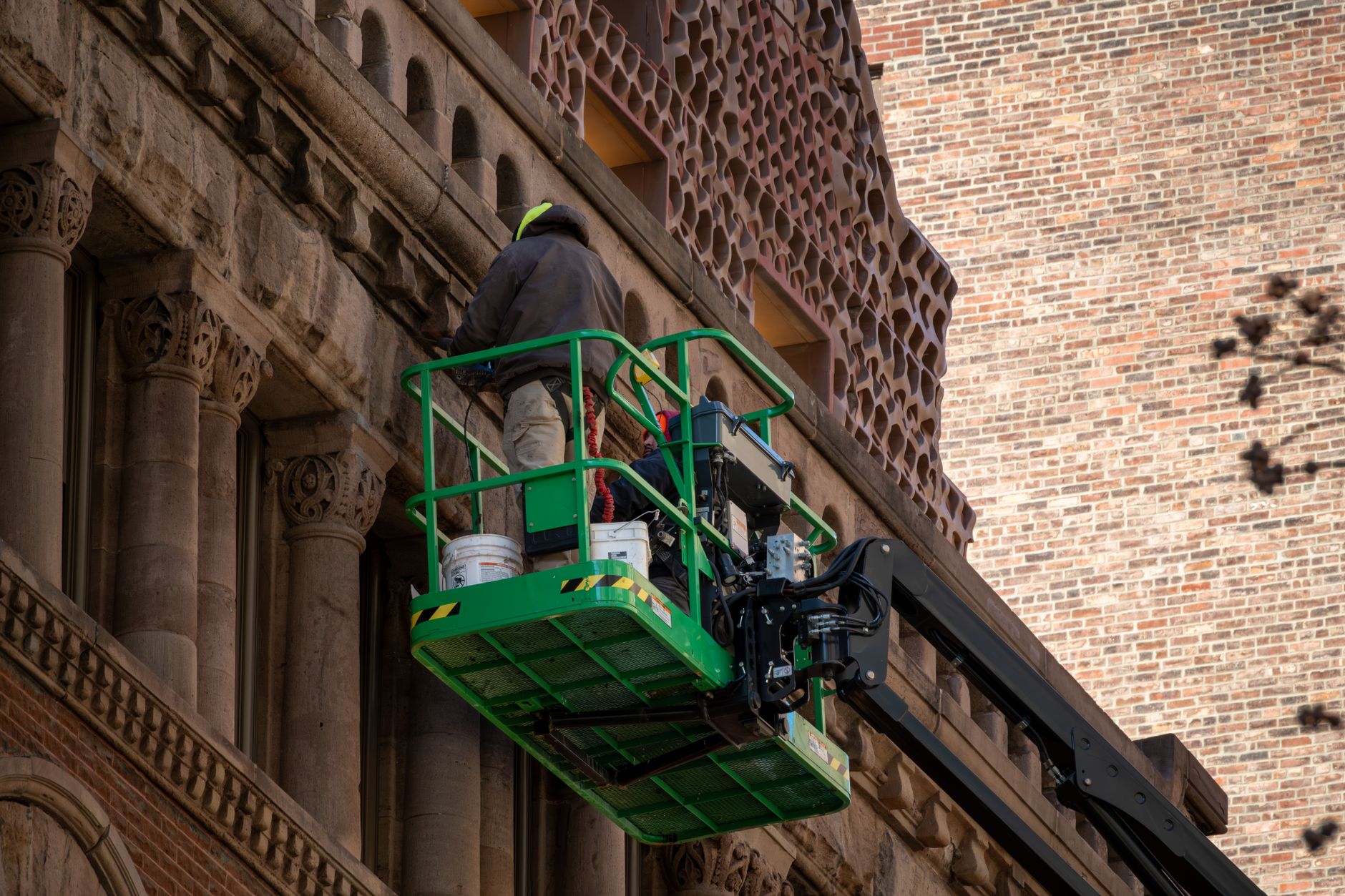
More than most people realise, though exercising them takes considerable political will. The primary tool is an Urgent Works Notice, which a local planning authority can serve on the owner of a listed building to carry out emergency repairs needed to preserve it. If the owner refuses, the council can do the work themselves and recover the costs. For buildings that are not yet in immediate danger but are deteriorating, councils can serve a Repairs Notice under Section 48 of the Planning (Listed Buildings and Conservation Areas) Act 1990, giving the owner a deadline to carry out specified works.
If a Repairs Notice is ignored, the council can pursue Compulsory Purchase. That sounds dramatic, and in practice it is used sparingly, partly because the legal process is expensive and slow. But it does happen. In recent years, councils in places like Bradford and Stoke-on-Trent have used or threatened compulsory purchase to force movement on long-stalled listed buildings. The threat alone sometimes prompts an owner to sell voluntarily to a developer with actual intentions.
There is also the Amenity Society objection process, the role of conservation officers within councils (where they still exist, given how many have been cut), and the possibility of Historic England itself stepping in with grant funding or direct advocacy on high-profile cases. For community groups trying to save a local landmark, knowing that multiple pressure points exist is useful.
The problem with enforcement in practice
Council conservation teams across England have been thinned out by a decade and a half of budget pressure. I’ve spoken to people who work in local planning, and the picture they describe is consistent: one conservation officer covering a patch that once had three, no dedicated enforcement budget, and a legal team already stretched by housing appeals. Serving a Repairs Notice takes officer time to draft, legal time to process, and political sign-off that elected members are often reluctant to give when they know the council might end up owning a crumbling mill with no obvious buyer.
This is where the parallel with other infrastructure neglect becomes clear. Just as councils face criticism over delayed pothole repairs because funding does not match the scale of the problem, conservation enforcement falls behind because the staff and legal resources simply are not there. The powers exist on paper; the capacity to use them often does not.
How residents can flag endangered buildings
If you believe a listed building in your area is deteriorating and not yet on the Heritage at Risk register, you can submit evidence directly to Historic England. Their website has a reporting form, and they do act on credible submissions from local residents and civic societies. Photographs with dates, a note of any visible structural decline, and information about who owns the building (available via the Land Registry for a small fee) all strengthen a report.
Local civic societies affiliated with the Civic Voice network are often better placed than individuals to push councils into action, because they carry institutional weight and have contacts inside planning departments. Groups like the Victorian Society and the Twentieth Century Society also have regional representatives who can advocate for specific building types.
If the building in question is in a particularly poor state and has potential for community use, it is worth looking at Community Asset Transfer as a route, though that process carries its own complexity. I’d also point anyone concerned about a local landmark towards their council’s conservation officer directly, even when teams are understaffed. A formal written request for an update on a named listed building creates a paper trail that matters if the case ever escalates.
For buildings where renovation is genuinely getting underway, the asbestos question is one that comes up repeatedly on older structures. The construction phase of any heritage repair project on a pre-1990 building typically requires specialist services to assess and manage asbestos risk before trades move in. Asbestos Compliance Solutions Ltd, which works with building and construction clients across Nottinghamshire and the north-east, is representative of the kind of specialist contractor a restoration project would engage at that stage, well before any listed building consent conditions are discharged.
What happens when nothing gets done
The building declines past the point of economic repair. At that stage, even a committed new owner faces costs that no grant funding can fully cover, and the case for demolition becomes easier to make. Once a listed building is gone, it is gone. The community loses not just a structure but the accumulated craft, materials and memory that went into it. That is not a romantic abstraction; it is a measurable loss to the character of a place, and to the kind of town centre vitality that so many communities are already struggling to maintain.
The Heritage at Risk register exists precisely to prevent that outcome, by naming the problem publicly and creating accountability. But the register only works if councils use their powers, owners feel genuine pressure, and residents know they have standing to act. Right now, all three of those conditions are patchier than they should be. The buildings are still there, for now. Whether they are there in another decade depends on decisions being made, or avoided, at local level right now.
Anyone wanting to understand more about how local communities can claim ownership of assets before they are lost might also find it useful to read about how community-led initiatives have taken root in other neglected local spaces, as the organising principles are often similar.




Leave a Reply