
The clocks go back, the evenings close in, and suddenly even a short walk to clear your head becomes a question of timing. Can you actually be in your local park after sunset? Who decides, and what happens if someone tells you to leave? I’ve had that conversation with more than one dog walker who had no idea whether they were technically in the right or not. The rules around walking in parks after dark in the UK are murkier than most people realise, and they vary considerably from one borough to the next.
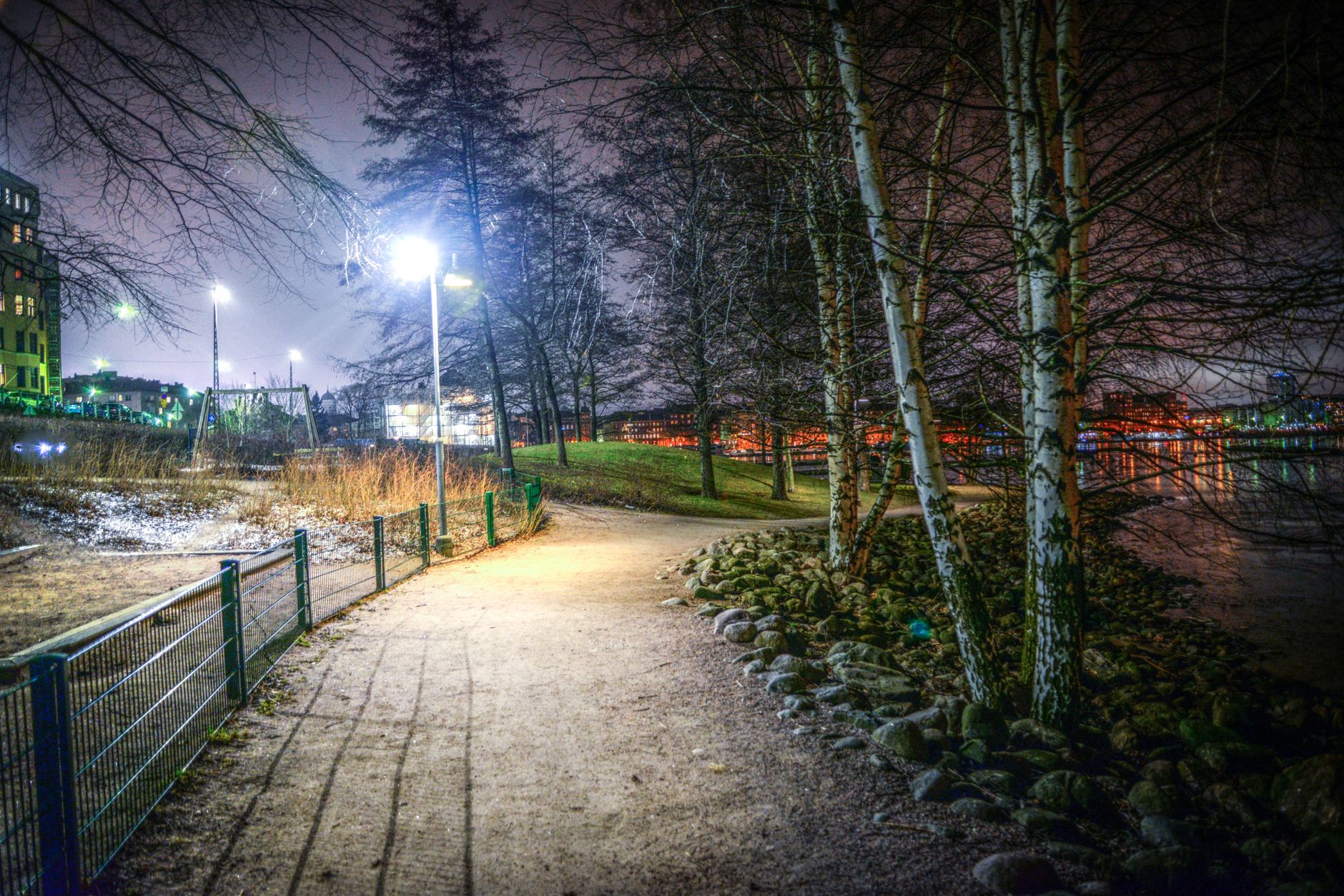
Are UK parks legally open after dark?
There is no single national rule. Most parks in England are managed by local councils, and each council sets its own opening and closing times through byelaws. Under the Local Government Act 1972 and predecessor legislation, councils have the power to restrict access to public open spaces at certain hours. This means that in Birmingham, your local park might close at 9pm in summer; in Hackney, the same type of green space might have no formal closing time at all.
The practical upshot is that many parks post closing times on their gates, usually ranging from dusk to around 10pm depending on the season, but enforcement is rare. You are unlikely to be removed by a warden unless a park has a specific history of antisocial behaviour. That said, byelaw prosecutions for remaining in a closed park do occasionally happen, with fixed penalty notices typically starting at £100. If you are unsure, your council’s parks team will usually have a published schedule on their website, and it is worth a quick check before you make an evening walk part of your regular routine.
Which parks tend to stay open later?
Large metropolitan parks with established running communities and good lighting often operate later hours. Hyde Park in London, for instance, closes at midnight. Regents Park closes at dusk, which shifts throughout the year. Many council-run parks in suburban areas stick to dusk closure, partly for maintenance reasons and partly because floodlighting costs money few councils have to spare right now.
Country parks and open access land designated under the Countryside and Rights of Way Act 2000 (CROW Act) operate differently. That legislation gives the public a right of access to open country on foot, and it does not contain a daylight-hours restriction. So a hillside, moorland, or heath with open access land designation can be walked at any hour, legally speaking. This is where knowing your terrain matters enormously. For anyone thinking about pushing beyond the local park into upland or rural settings, this piece on night walking in the british hills: how to plan a safe and rewarding dark-hours route gives genuinely useful guidance on planning those darker, more demanding routes safely.
What your council is actually doing to manage evening access
Evening park access is not purely a legal question. It is also a resource question, and councils across England are under significant financial pressure in 2026. The Association of Directors of Environment, Economy, Planning and Transport reported in 2025 that parks budgets have been cut by an average of 24% in real terms since 2010. Fewer parks officers means less active management of opening and closing times, which in practice often means gates left unlocked and no one to enforce a curfew.
Some councils are experimenting with community-led approaches to safer evening access. Nottingham City Council piloted a “park stewardship” scheme in 2024, training volunteers to be visible in key green spaces during evening hours. Similar models have appeared in Bristol and Sheffield. These sit alongside broader community initiatives that have come to characterise how towns manage shared space; if you are interested in how local volunteers are stepping into gaps left by reduced public services, the work being done through community energy schemes and local volunteer programmes across the UK shows the same pattern emerging in different settings.
Safety when walking in parks after dark: practical considerations
Fear of crime is the dominant reason people avoid parks at night, and it is not irrational. According to the ONS Crime Survey for England and Wales, personal robbery and street theft are more likely after dark, though the absolute risk in well-used suburban parks remains low. What shifts after sunset is the nature of the environment, not necessarily the probability of an incident.
Lighting is the biggest practical variable. Parks with maintained sodium or LED path lighting feel very different from an unlit common at 8pm in November. I’d suggest walking a route in daylight first if you plan to use it regularly after dark, noting where the lights actually are, where the CCTV covers (and doesn’t), and where the nearest exit points sit. A poorly lit path that cuts through a dense tree line is not the same risk as a lit tarmac path beside a road.
Mobile signal matters too. Some older parks in valleys or surrounded by dense planting can drop to no signal for stretches. If you are going out for more than a quick circuit, tell someone your route. This sounds obvious. Most people don’t do it. A group of Nottingham runners I spoke to last autumn had a simple WhatsApp check-in protocol between themselves, nothing elaborate, just a message when everyone was home. That kind of informal community arrangement costs nothing and is genuinely effective.
Your rights if challenged by a security guard or warden
If you are in a park during its legal opening hours, you are on public open space and you have every right to be there. A council-employed parks officer can ask you to leave at closing time and can issue a fixed penalty notice if you refuse, but they cannot physically remove you without police involvement. A private security guard working for a contracted park management company has no greater powers of arrest than any other citizen unless the land is privately owned, in which case the terms of access may differ.
The question of who actually owns the land underneath your local park is worth knowing. Lots of parks that feel entirely public are, in fact, privately owned and managed under long-term arrangements. Check the Land Registry if you want to be certain. It costs £3 to view the title register for a specific parcel of land, and in my experience the answer often surprises people.
What residents can do to push for better evening access
If you feel your local green space is poorly managed after dark, the clearest route is through your council’s parks service and your local councillor. Many councils review park byelaws infrequently, and a formal representation from residents can trigger a review. Local parish councils in rural areas often have more direct control over green space management than people realise.
Lighting petitions have worked. In 2023, residents in Stockport successfully lobbied for additional path lighting in Brinnington Park after a sustained campaign that included a formal petition submitted through the council’s online portal. The process took about eight months from first submission to installation. Slow, but it worked.
Community groups focused on local open spaces often connect with wider campaigns around public safety and access. The same civic energy that has driven projects like community defibrillator networks across the UK shows what residents can achieve when they organise around a specific, practical goal. Evening park safety is a reasonable ask. Most councils will listen if the case is put clearly and persistently.
The short version: know your park’s byelaws, walk with a plan, and if you want better provision after dark, make noise locally. That is how most of these improvements actually happen.
Frequently Asked Questions
Is it illegal to walk in a UK park after it closes?
It depends on the park. If a council park has a byelaw closing time and you remain after that time, you can technically receive a fixed penalty notice, usually starting at £100. In practice, enforcement is rare, but it is worth checking your council’s published hours before making a habit of late evening visits.
Can a security guard remove me from a park at night?
A council parks officer can ask you to leave at closing time and escalate to police if you refuse. A private security guard has no special powers beyond those of an ordinary citizen unless the land is privately owned. They cannot physically remove you unless you are committing an offence.
Which UK parks are open late or have no closing time?
Large central parks such as Hyde Park close at midnight, while smaller suburban parks often close at dusk. Open access land designated under the CROW Act, including moorland and heaths, has no daylight restriction and can legally be walked at any hour.
How can I find out if my local park closes at a specific time?
Check your council’s parks and leisure pages online, or ring the parks department directly. Many councils post byelaw information on their websites. You can also look at the park gates themselves, as closing times are usually displayed on notice boards near the main entrance.