

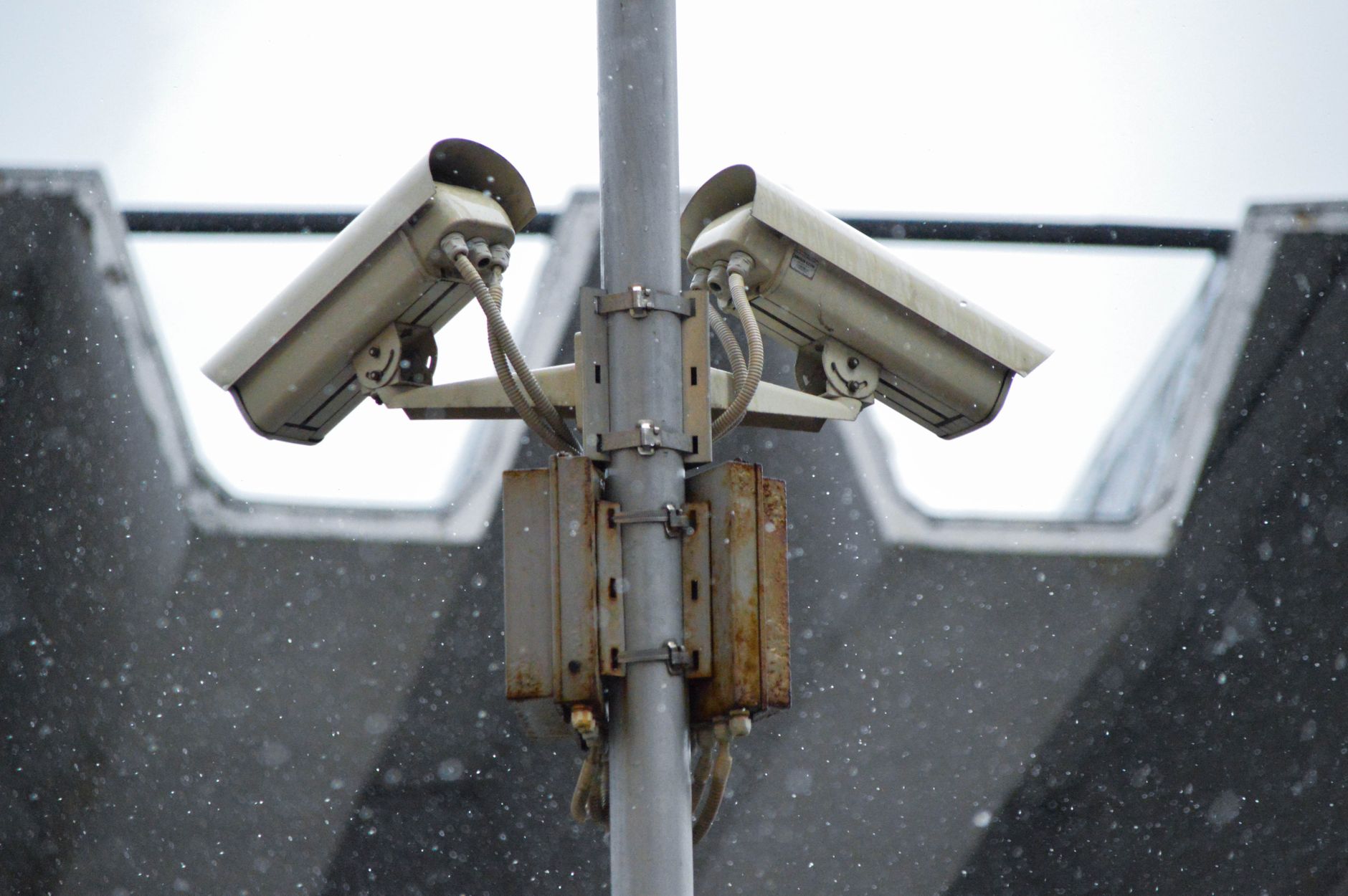
You might have noticed them at your local tip, or glanced up at one perched above the barrier of your nearest car park. Automatic Number Plate Recognition cameras, better known as ANPR, have quietly spread far beyond the speed trap and the bus lane. Across the country, local authorities are deploying them at household waste recycling centres, in town centre car parks and along high streets, and a growing number of privacy campaigners are asking some pointed questions about where exactly the legal line is drawn.

This is not a fringe concern. The Surveillance Camera Code of Practice, published by the Home Office and overseen by the Surveillance Camera Commissioner, sets out the principles that public authorities are expected to follow. The code has statutory force under the Protection of Freedoms Act 2012, meaning councils are not just encouraged to follow it; they are legally expected to demonstrate compliance. In practice, the picture is patchy at best.
What are ANPR cameras actually doing at waste sites?
The expansion into household waste recycling centres has been one of the more visible changes in recent years. Councils argue the case is straightforward: fly-tipping costs English local authorities around £50 million a year to clear up, according to figures from the Department for Environment, Food and Rural Affairs (DEFRA), and ANPR helps them identify vehicles that dump waste illegally after being turned away from a site. Some councils have also used the technology to enforce permit schemes that restrict who can use certain tips, particularly for commercial waste.
What concerns campaigners is the data trail that comes with all of this. Every plate read at a waste site creates a timestamped record linking a vehicle, and by extension its registered keeper, to a specific location at a specific moment. Civil liberties group Big Brother Watch has repeatedly pointed out that local authorities often retain this data for periods far longer than the immediate enforcement purpose would justify. There is also the question of what happens to that data afterwards, whether it is shared with other agencies and under what authority.
The situation around household waste recycling centre access restrictions is already a contentious one in many areas. Adding a surveillance layer to an already fractious local issue has not gone down well everywhere.
Car parks and town centres: who is watching, and why?
The car park application has become almost routine. Councils and private operators use ANPR to manage parking enforcement, matching entry and exit reads to calculate dwell time and issue penalty charge notices. Most drivers accept this without much thought. The problem comes when the systems do more than time a parking stay.
Several councils have linked ANPR reads from car parks into wider town centre monitoring networks. In some cases, reads from multiple points across a town centre are being aggregated to map vehicle movements through an area over time. That is a meaningfully different activity from checking whether someone overstayed a two-hour parking limit. I’ve seen council planning documents in various authorities describe these systems as “footfall intelligence” tools, which is a rather anodyne way of saying you are tracking where people go and when.
The Surveillance Camera Code of Practice requires that any system should be used for no more than the specific purpose for which it was established. Using a car park enforcement system to build movement intelligence on a town centre’s road network is the kind of scope creep the code was designed to prevent. Whether commissioners are actively auditing this is, frankly, less clear than it should be.
For drivers who use in-car systems to navigate or who rely on connected devices for directions, there is a broader conversation happening about data and privacy on the move. Tech retailers such as sourcesounds.com that cover in-car technology are increasingly fielding questions from customers about what data their connected vehicles and devices generate, and it sits squarely within the same public unease about how movement data is collected and used.
What the legal framework actually says
The Protection of Freedoms Act 2012 requires all local authorities in England and Wales to have regard to the Surveillance Camera Code when operating surveillance systems in public places. The code’s twelve guiding principles include requirements that cameras have a clear, lawful purpose; that data is not retained longer than necessary; that the public are informed a system is in operation; and that use of the technology is proportionate to the problem being addressed.
The Information Commissioner’s Office (ICO) also has a stake here. ANPR data constitutes personal data under UK GDPR because a vehicle’s registration mark can reasonably be used to identify its keeper. That means councils operating ANPR systems must have a lawful basis for processing the data, a legitimate data retention policy, and a publicly accessible privacy notice explaining the system’s purpose.
In my experience reading through council ANPR policies, the quality varies enormously. Some authorities publish detailed, clearly written data protection impact assessments. Others have privacy notices that are vague to the point of being uninformative, or that describe purposes in terms so broad they could justify almost any use. The ICO has the power to audit and enforce, but its resources are stretched across a vast range of data processing activities.
What privacy campaigners are asking for
Big Brother Watch and Liberty have both called for stronger independent oversight of local authority surveillance, including mandatory publication of all ANPR deployments, their stated purpose and their data retention periods. There is also a push for the Surveillance Camera Commissioner’s role to carry more enforcement teeth; at present the commissioner can assess and advise, but cannot compel compliance in the way the ICO can.
It is worth noting that the concern here is not that councils should never use ANPR outside of traffic enforcement. The technology has clear, legitimate uses, and nobody seriously argues that fly-tipping should be left unchecked. The argument is about proportionality, transparency and accountability. If a council is going to read your plate at the tip, record it, and retain it for six months, residents should be able to find out exactly why, for how long and who has access to that record.
For context, these concerns connect to broader worries about public space surveillance that show up repeatedly in local communities. The creeping normalisation of monitoring in everyday life, whether through cameras in car parks, enforcement systems around school streets, or tracking at public facilities, is a pattern that local residents are increasingly noticing and questioning.
There is also the question of what happens when councils share ANPR data with police forces under the National ANPR Service (NAAS), which the Home Office operates centrally. Data uploaded to NAAS can be retained for up to two years and accessed by police across forces. Whether residents using their local tip on a Tuesday morning expect that journey to sit in a national law enforcement database is, I’d argue, something councils have not communicated clearly.
How to find out what your council is doing
You have a right under UK GDPR to submit a Subject Access Request to your council asking what data it holds about your vehicle via ANPR systems. You can also ask your council directly, via a Freedom of Information request, to disclose how many ANPR cameras it operates, their stated purposes and its data retention policy. The pattern of councils being slow to respond to FOI requests on sensitive operational matters is well-documented, but persistence is often rewarded.
If you believe a council is processing your vehicle data unlawfully, you can raise a complaint with the ICO via ico.org.uk. The commissioner cannot award compensation, but can issue enforcement notices and, in serious cases, substantial fines.
The cameras are not going away. If anything, as councils look for cost-effective enforcement tools in a period of tight budgets, ANPR will keep spreading. The question now is whether the oversight keeps pace with the technology, or whether residents only find out how much data has been gathered about them when something goes wrong.
Frequently Asked Questions
Is it legal for UK councils to use ANPR cameras at waste sites and car parks?
Yes, but with conditions. Councils must comply with the Surveillance Camera Code of Practice under the Protection of Freedoms Act 2012 and must have a lawful basis for processing personal data under UK GDPR. The purpose must be specific, proportionate and communicated clearly to the public.
How long can councils keep ANPR data?
There is no single fixed period; each council must set a retention period proportionate to the purpose. For parking enforcement, a few weeks after a notice period closes is typical. Data uploaded to the police National ANPR Service can be held for up to two years.
Can I find out if my number plate has been recorded by a council ANPR system?
You can submit a Subject Access Request to your council under UK GDPR. The council must respond within one calendar month and tell you what data it holds about your vehicle. There is no charge for making this request.
Who oversees council use of ANPR cameras in the UK?
Two bodies are relevant. The Surveillance Camera Commissioner oversees compliance with the Code of Practice and can issue assessments and guidance. The Information Commissioner’s Office (ICO) enforces UK GDPR, including how ANPR data is collected, stored and shared.
Leave a Reply