
Every eight minutes, someone in the UK dies from an out-of-hospital cardiac arrest. The survival rate if a defibrillator is used within three to five minutes sits at around 70 per cent, according to the British Heart Foundation. Drop that to ten minutes and the odds collapse. Those numbers make the location of your nearest public defibrillator genuinely important, not just as a piece of civic trivia but as something worth knowing before an emergency forces you to find out the hard way.
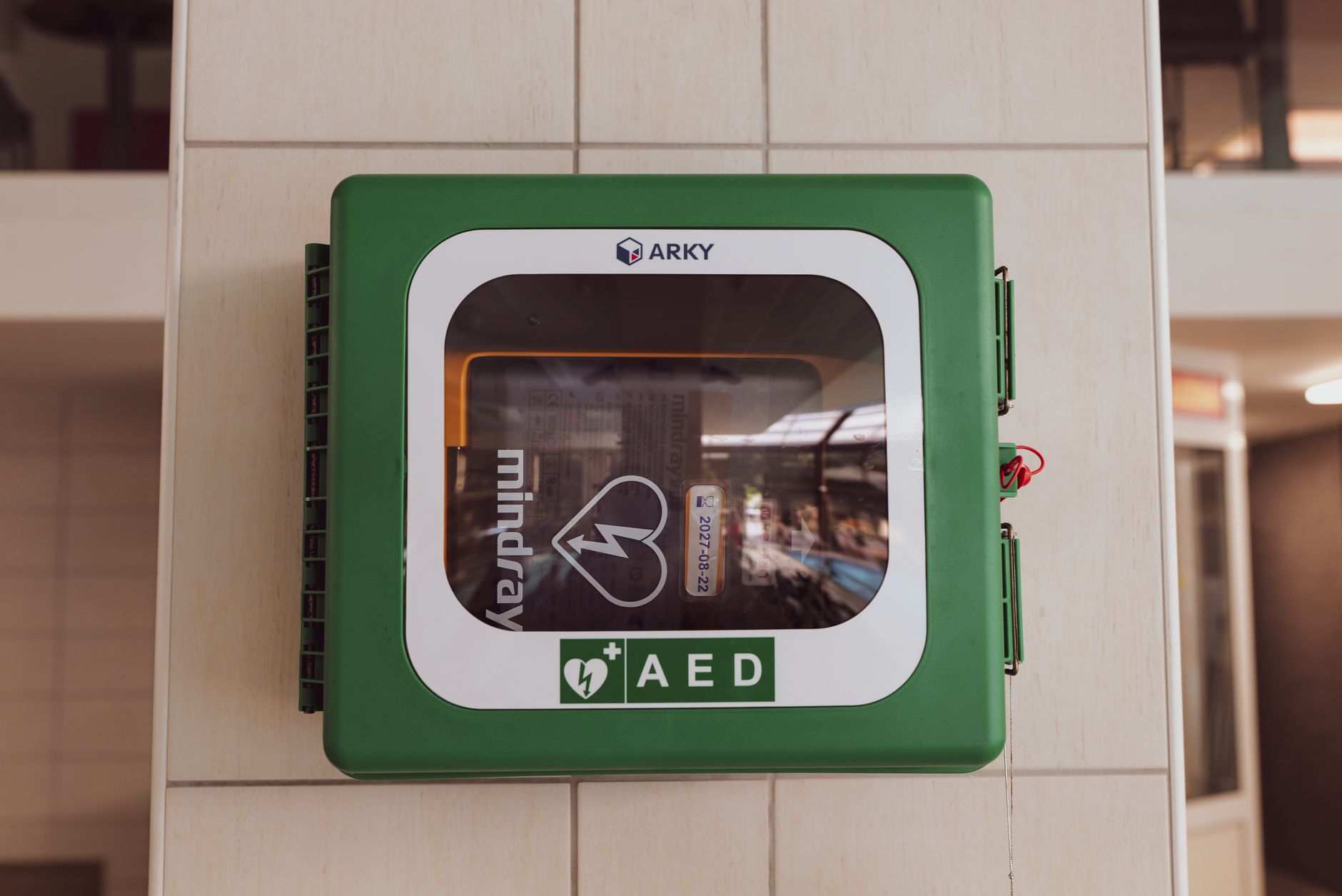
Public defibrillator locations UK-wide have grown considerably over the past decade. Parish councils, supermarkets, sports clubs, community groups and local businesses have all put them up, often in response to a death in the local area that might have been prevented. The result is a patchwork of machines in varying states of maintenance, registered on several different databases, with no single body legally required to keep them working. That last point matters more than most people realise.
How the national circuit register works
The main tool for locating a nearby machine is The Circuit, a national defibrillator network run by the British Heart Foundation in partnership with ambulance services across England, Wales, Scotland and Northern Ireland. You can find it at bhf.org.uk/the-circuit. Ambulance services can see registered devices in real time during a 999 call, which means an operator can direct a bystander to the nearest accessible machine rather than leaving them to guess.
Registration on The Circuit is free and takes minutes. Owners upload the location, a photo, access details and information about whether the cabinet is alarmed or freely accessible. The system also lets owners log servicing dates and battery replacements. I’ve spoken to a community first responder in Lancashire who described The Circuit as genuinely transformative for call handlers: “Before it existed, we were telling people to look for a green box and hope for the best.”
There are, however, machines that still sit outside the register. Older installations, particularly those put up by well-meaning local groups before 2019 when The Circuit launched, sometimes appear only on regional databases or nowhere at all. Some councils maintain their own asset lists separately. If you want to check whether your village hall or sports centre machine is visible to ambulance services, the simplest thing is to log in and search yourself, or ask whoever manages the cabinet to check.
Who is actually responsible for maintaining a public defibrillator?
This is where it gets complicated. There is no UK law requiring any organisation to install a defibrillator, and there is no law setting out a mandatory maintenance schedule once one is in place. Responsibility falls on whoever owns or manages the site. For a machine bolted to the wall of a church hall, that is the church. For one outside a pharmacy on the high street, it is whoever paid to put it there. Councils sometimes own devices on council land, but that is far from universal.
The practical consequence is that maintenance quality varies enormously. The battery in a defibrillator typically lasts four to seven years and the pads need replacing every two to three years, sometimes sooner if the seal is broken. Cabinets can be vandalised, stolen or left with dead batteries for months before anyone notices. St John Ambulance and the British Heart Foundation both recommend monthly visual checks and annual full inspections by a trained individual, but these are recommendations, not requirements.
Some councils have begun taking a more active role. Several London boroughs now run annual audits of all publicly accessible machines within their boundaries, cross-referencing with The Circuit to flag unregistered or lapsed devices. Bristol City Council introduced a defibrillator champion scheme in 2024, pairing local volunteers with specific machines to carry out monthly checks. These are good models. Most councils, though, have no formal programme at all, and in areas already stretched by cuts to social care and community services, a defibrillator audit is rarely near the top of anyone’s list.
What to do if your local defibrillator is out of order
First, update The Circuit. If the device is already registered, anyone with an account can flag it as out of service. This immediately removes it from the pool that ambulance call handlers see, which stops a bystander being sent to a machine with a flat battery during an emergency. That action alone could matter more than anything else you do.
Second, contact the owner directly. Check the cabinet itself, as many display a contact number or a name. If it is on council land or outside a council building, your local authority’s highways or community safety team is the right starting point. A formal email rather than a phone call gives you a paper trail. If you get no response after a reasonable period, a follow-up to your ward councillor tends to move things along faster. Councillors respond to this kind of specific, locatable problem. It is much easier to act on than a general complaint about underfunding.
Community groups that fundraise to install machines should also think about ongoing costs from the start. Replacement pads run to roughly £30 to £50 a set, batteries vary widely depending on the model, and full replacement units can cost anywhere from £800 to £2,000. Some parish councils include defibrillator maintenance in their annual precept. Others rely on irregular fundraising, which creates gaps. If your village’s machine was bought with a one-off grant ten years ago, it is worth asking who is currently footing the upkeep. This is the sort of thing community groups already running regular local initiatives tend to be well placed to fold into their existing structures.
Finding public defibrillator locations near you
The Circuit is the most comprehensive starting point. The BHF’s website has a public map that does not require an account to search. You type in a postcode and it shows registered machines within a chosen radius, along with access details and whether each one is alarmed or open 24 hours.
Beyond the national register, your ambulance service may run its own map. London Ambulance, North West Ambulance and South East Coast Ambulance (SECAmb) all have publicly accessible defibrillator finders that pull data partly from The Circuit and partly from their own records. Local Facebook groups and Nextdoor communities are also surprisingly reliable, particularly in rural areas where parish councils post updates when new machines go in.
My suggestion: look now. Spend two minutes finding the two or three nearest public defibrillator locations to your home and your workplace. Write down where they are. The research consistently shows that bystanders freeze during cardiac arrest not because they lack willingness but because they lack certainty about what to do next. Knowing where the machine is removes one piece of that paralysis. It costs you nothing. This is the kind of local knowledge that communities used to pass on informally, in the same way people once knew where the nearest telephone box stood, and it is worth reviving, especially in areas where other community reference points are disappearing.
If you want to get more involved, The Circuit actively encourages community organisations to become registered owners and train volunteers to carry out regular checks. St John Ambulance runs defibrillator awareness sessions, and many are free to attend. The machine on your high street is only as useful as the person who keeps it working.