
There are more than 170,000 neighbourhood watch schemes operating across England and Wales, covering millions of households. That figure, tracked by Neighbourhood Watch Network, the national charity that supports these groups, tells you something important: this is not a relic of the 1980s. It is one of the largest voluntary crime prevention movements in the country, and in many towns it is growing.
Whether you live on a quiet cul-de-sac in Shropshire or a busy terraced street in Leeds, the basic idea is the same. Residents keep an eye out for each other, share information about suspicious activity, and work alongside the local police to make their area feel safer. Simple, but the evidence for its effectiveness is hard to argue with.
What Are Neighbourhood Watch Schemes and How Do They Actually Work?
A neighbourhood watch scheme is a formally organised community group where residents agree to report anything suspicious to each other and to the police. Groups are typically coordinated by a volunteer co-ordinator, who acts as the point of contact between residents and the local constabulary.
Most schemes are registered with Neighbourhood Watch Network, which provides guidance, resources, and access to AlertsAll, a messaging platform that lets co-ordinators send crime alerts and safety information directly to members. Many police forces in England and Wales also run their own neighbourhood alert systems that link in with these groups.
The day-to-day reality is relatively low-key. A co-ordinator might forward a police bulletin about a series of car break-ins on nearby streets. Members might WhatsApp each other about an unfamiliar vehicle parked for several days. Someone notices a neighbour’s property looks like it might have been tampered with and calls 101. None of this requires anyone to confront criminals or put themselves at risk. It is about awareness, communication, and making sure the right people know what is happening on the ground.
Does Neighbourhood Watch Actually Reduce Crime?
This is the question everyone asks, and the honest answer is: yes, when it is done properly. Research published by the College of Policing found that neighbourhood watch schemes can reduce burglary by between 16 and 26 per cent in areas where they are well established. That is a meaningful number, and it reflects something beyond simple surveillance.
Part of the effect is practical. Opportunistic burglars tend to target streets where they feel unobserved. Visible signs, an active community presence, and the knowledge that residents talk to each other all change that calculation. Part of the effect is also psychological. Communities where people know their neighbours and feel invested in their area tend to have lower crime rates across the board.
It is worth noting that neighbourhood watch schemes work best as part of a wider picture. They are not a substitute for adequate policing, and they are not appropriate for tackling serious or organised crime. But as a complementary measure, working alongside landlords, housing associations, and local councils, they represent one of the most cost-effective community safety tools available.
How to Join an Existing Neighbourhood Watch Group Near You
The quickest way to find out whether there is already a scheme on your street or in your postcode is to use the Neighbourhood Watch Network’s online search tool at ourwatch.org.uk. Enter your postcode and it will show registered groups in your area.
If a group exists nearby, the site will direct you to the relevant co-ordinator or local organiser. From there, joining is usually as simple as a conversation and, in many cases, downloading the AlertsAll app to receive updates. There are no membership fees for residents.
Your local police force’s website is also worth checking. Most forces have dedicated community policing pages that list active groups and provide local contact details. In some areas, the local council’s community safety team keeps its own register.
How to Set Up a Neighbourhood Watch Scheme From Scratch
Starting a new scheme takes a bit more effort, but it is far more straightforward than many people expect. Here is a realistic outline of how it tends to work.
First, gauge interest among your immediate neighbours. A leaflet through doors, a message on a local Facebook group, or a conversation at the school gate is usually enough to identify who might want to be involved. You do not need everyone on the street, but you need enough people to make communication meaningful.
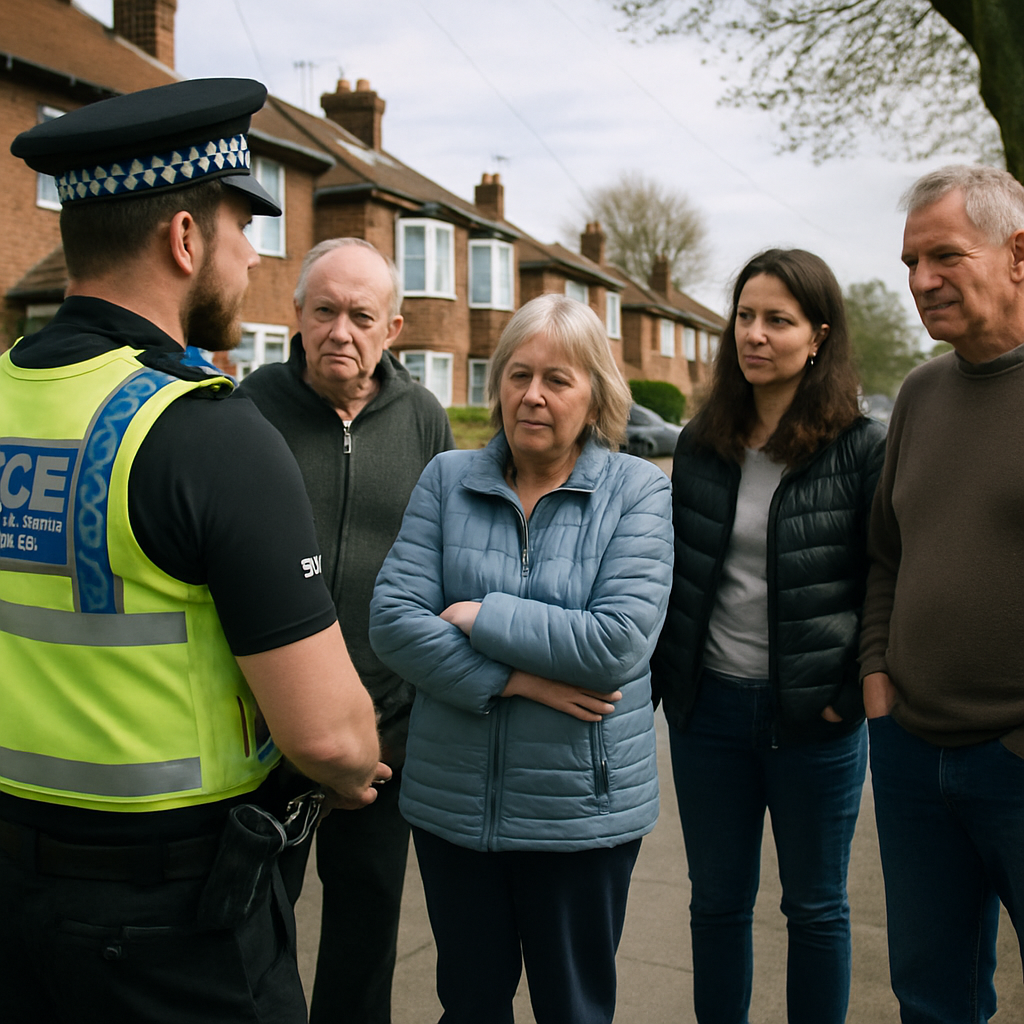
Next, register with Neighbourhood Watch Network via the ourwatch.org.uk website. Registration is free and gives you access to resources, templates for communications, and the AlertsAll platform. You will also be put in touch with your local Neighbourhood Watch co-ordinator or the relevant police community support officer (PCSO), who can provide additional guidance and attend your first meeting if useful.
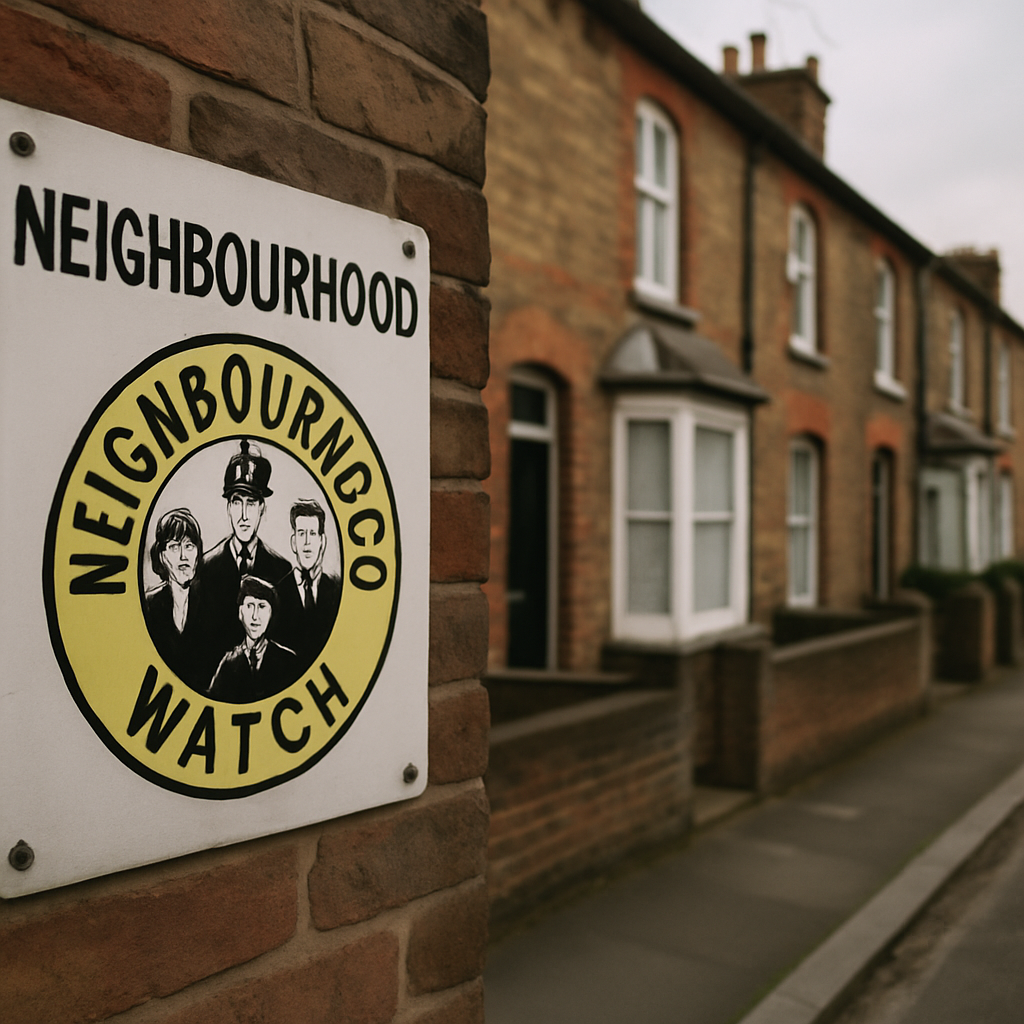
Once you are registered, order your signs. The familiar Neighbourhood Watch signs are available through the Network and through some local councils at low or no cost. Displaying them prominently is one of the most visible deterrents the scheme offers.
Hold a short introductory meeting, in person or online, to agree on how the group will communicate. WhatsApp groups have become the default for many schemes, though some prefer email chains or the AlertsAll platform. Agree on basic ground rules: what kind of information to share, when to call 999 versus 101, and how to handle sensitive information without spreading rumours.
The whole process from first conversation to registered scheme can take as little as two to three weeks.
What Makes a Good Neighbourhood Watch Co-ordinator?
The co-ordinator role does not require any formal qualifications. What it requires is someone who is reasonably organised, willing to pass on information promptly, and able to keep the group focused without letting it descend into gossip. Most successful co-ordinators spend no more than an hour or two per month on the role during quiet periods, though it can be more intensive if there is a specific local crime issue to address.
Good schemes tend to have co-ordinators who treat the role as a long-term commitment rather than a quick fix. Communities that have had consistent, engaged co-ordinators for several years consistently report higher confidence in local safety and better relationships with neighbourhood policing teams.
Beyond Crime: The Wider Value of Neighbourhood Watch
It would be a mistake to think of neighbourhood watch schemes as purely crime-fighting operations. In practice, they often serve as the foundation for wider community connections. Co-ordinators frequently end up checking in on elderly residents during extreme weather, sharing information about local services, or helping newcomers feel welcomed onto their street.
In an era when many people do not know their neighbours’ names, that social fabric has real value. Towns with active, engaged communities are measurably more resilient, not just to crime, but to all kinds of local challenges. The scheme gives people a reason to talk to each other, and that tends to have a compounding effect over time.
If your street does not yet have a scheme, the process of starting one is genuinely accessible. The resources are there, the national network is well established, and the precedent for it working is clear. All it really takes is one person willing to make the first call.
Frequently Asked Questions
How do I find out if there is a neighbourhood watch scheme on my street?
Go to ourwatch.org.uk and enter your postcode to search for registered schemes in your area. Your local police force website or council community safety team may also list active groups nearby.
Is neighbourhood watch free to join?
Yes, joining a neighbourhood watch scheme as a resident costs nothing. There are no membership fees. If you are setting up a new scheme, registration with Neighbourhood Watch Network is also free.
How effective are neighbourhood watch schemes at reducing burglary?
Research from the College of Policing indicates that well-run neighbourhood watch schemes can reduce burglary rates by between 16 and 26 per cent in their area. The effect is strongest in streets where residents actively communicate and where visible signs are displayed.
How long does it take to set up a new neighbourhood watch group?
From initial conversations with neighbours to having a registered scheme with signs in place, the process typically takes two to three weeks. Registering with Neighbourhood Watch Network online is straightforward and free.
Do I need to work with the police to run a neighbourhood watch scheme?
Whilst police involvement is not strictly required, most schemes benefit from a relationship with the local Police Community Support Officer (PCSO). PCSOs can attend meetings, provide local crime information, and help co-ordinators understand when and how to escalate concerns.