
Every August, the same conversation happens in kitchens across the country. Parents sit down with a school-issued kit list, start adding things up, and quietly panic. School uniform costs in the UK have climbed steadily over the past few years, and in 2026 the pressure is as sharp as ever. A new blazer here, a branded PE kit there, a pair of approved shoes that can only be bought from one shop in town. It adds up faster than most families expect.
I’ve spoken to several parents in recent months who described the back-to-school shop as one of the most stressful financial moments of the year, not Christmas, not the summer holiday, but buying a school jumper with a logo on it. That says a great deal about where things stand.

What are families actually paying for school uniforms?
The figures are stark. Research published by the Department for Education found that the average cost of a secondary school uniform in England is around £442 per year, once you factor in PE kit, shoes, bags and branded items. For primary school children the figure is lower but still significant, typically between £100 and £200 depending on the school’s requirements.
The problem is not the concept of a uniform itself. Most parents I’ve spoken to are broadly in favour of a shared dress code. The issue is the extent to which some schools have made branded, single-supplier items the core of their kit lists. When a school requires a specific embroidered blazer that can only be purchased from one designated supplier at £65, that is not just a style preference, it is a cost imposition on families who have no alternative.
The government’s statutory guidance and what it actually requires
Schools in England are now bound by statutory guidance introduced in 2021 and strengthened since. The rules require schools to keep uniform costs reasonable, limit the number of branded items they can insist upon, and ensure uniform is available from more than one retailer where possible. Headteachers must also give at least half a term’s notice before any changes to uniform policy.
In practice, compliance is patchy. Some schools have genuinely responded, reducing their branded requirements and pointing families towards supermarket alternatives for generic items. Others have done the bare minimum, tweaking their supplier arrangements on paper whilst still funnelling families towards expensive kit. If you feel your child’s school is pushing the limits of what that guidance actually permits, it is worth reading the guidance directly and, if necessary, raising a formal complaint with the governing body. The legal resource LawMate is one place parents have turned to understand their rights in situations where school policies feel more like mandates than guidelines.
Second-hand uniform schemes: the PTAs quietly doing vital work
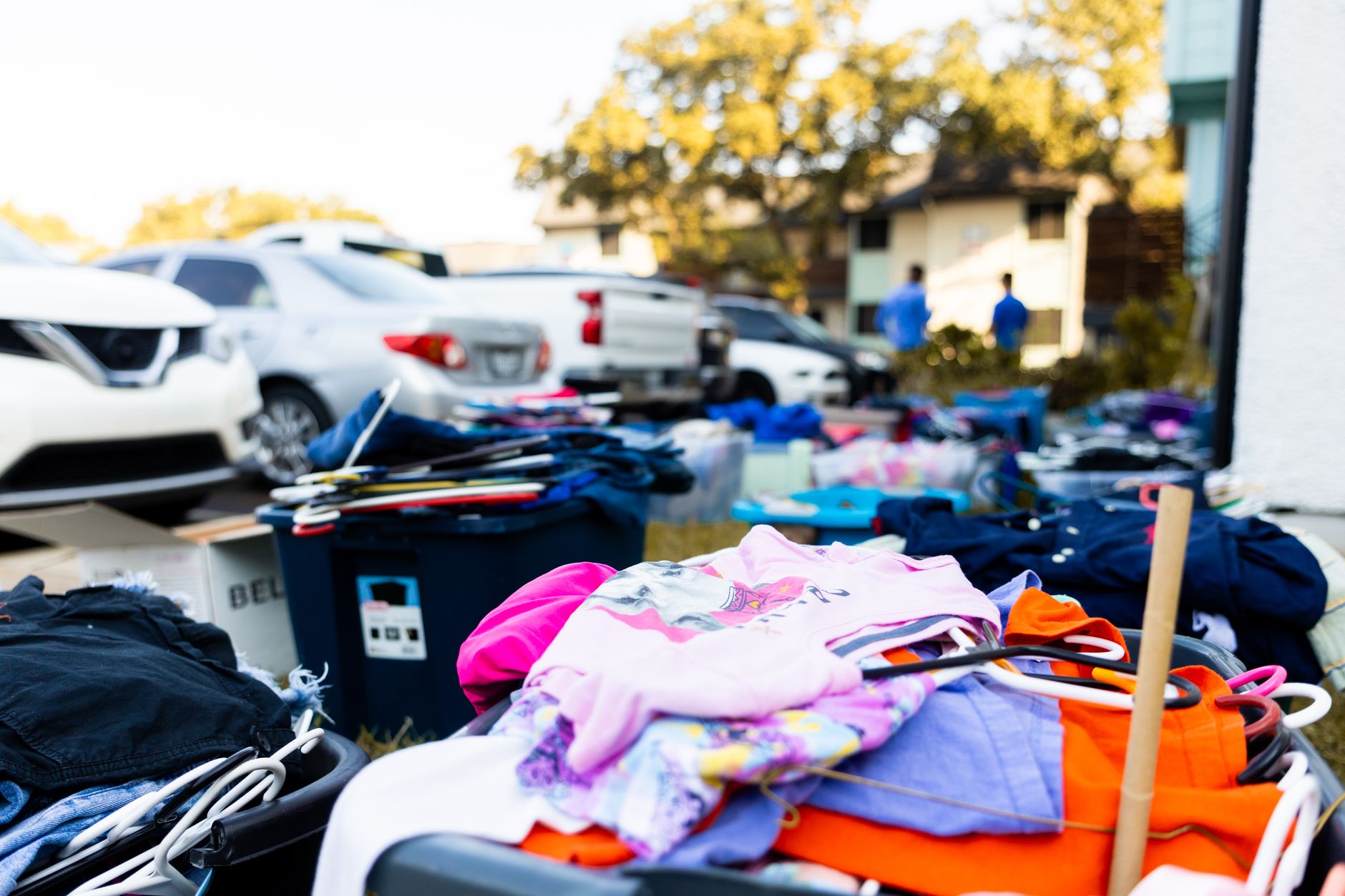
Across the country, Parent Teacher Associations have stepped into the gap. Second-hand uniform schemes, often run from school halls, community centres or church rooms on Saturday mornings, have become a genuine lifeline for many families. You hand over a few pounds, sometimes nothing at all, and walk away with a blazer in decent condition that would have cost four times that from the official supplier.
In some areas these schemes have become remarkably well organised. I’ve heard of PTAs in Lincolnshire and parts of Greater Manchester that now operate year-round collections and sales, with online booking systems and size-specific inventory. The key is getting in early. Uniform swaps and sales tend to happen in July and early September, and the good sizes go quickly.
If your school does not have a second-hand scheme, it is worth raising it at the next PTA meeting. Many schools are quietly supportive once someone puts their hand up to run it. Some councils have also started funding uniform exchange projects as part of wider cost-of-living support, so it is worth checking what your local authority offers.
Where to find affordable school uniform near you
For non-branded items, supermarkets remain the most competitive option. Asda’s George, Tesco’s F&F and Marks and Spencer’s school range all produce plain trousers, skirts, shirts and jumpers at prices that have held reasonably steady. A full set of basics from a supermarket can cost under £25 for a primary school child.
For branded items, the picture is harder. eBay and Facebook Marketplace are worth a search with your school’s name included. Charity shops near secondary schools often receive good-quality donations in late July and early August, worth a browse in the weeks before term. Some specialist school uniform retailers, particularly those with local shop presence, now offer end-of-season discounts on previous-year stock.
The cost-of-living pressure on families is a theme running through a lot of local issues right now. Schools asking families to spend significant sums on compulsory clothing sits alongside other hidden community costs, not unlike the unexpected charges that flat owners face with service charges and ground rent in leasehold properties. In both cases, the costs feel non-negotiable even when the legal position is more nuanced than it appears.
What parents can do if costs feel unmanageable
Schools in England are required to have a uniform policy that takes affordability into account. If you cannot afford specific branded items, contact the school directly and ask whether any hardship fund or support scheme exists. Many schools have discretionary budgets for exactly this purpose that are never publicly advertised.
Local councils sometimes operate clothing grants or emergency support funds for families on low incomes. The Healthy Start scheme and Free School Meals eligibility can in some areas unlock additional support. It is always worth asking the school office or your council’s family support team what is available.
There is also a broader point to make about the culture around these policies. Schools set uniform requirements, but governing bodies approve them. If a policy feels unreasonable, parents have a legitimate voice through the governing body, which must include at least one elected parent governor. Raising concerns at that level carries more weight than a letter to the head. The community pressure that has changed how councils handle local nuisance complaints or shifted attitudes on pavement parking shows what persistent local voices can achieve when they engage the right decision-makers.
School uniform costs in the UK are not going to solve themselves. But between second-hand schemes, statutory guidance, and a bit of forward planning, families do have more options than the kit list makes it look. The important thing is knowing where to look, and knowing when the rules are on your side.