

Knowing how safe your neighbourhood is should not require a degree in data analysis. Yet for many residents, understanding local crime statistics UK databases provide can feel like navigating a maze of spreadsheets and police jargon. The good news is that official, granular crime data is more accessible than ever, and learning how to read it can genuinely change how you engage with your local area.
Whether you have noticed an uptick in incidents on your street, are considering moving to a new neighbourhood, or simply want to hold your local police force to account, this guide breaks down exactly where to find the data and what it means in practice.

Where to Find Official Local Crime Statistics UK Residents Can Trust
The primary source for neighbourhood-level crime data in England and Wales is the Police.uk website. Run by the Home Office, it allows anyone to enter a postcode and view reported crimes broken down by category, including burglary, vehicle crime, anti-social behaviour, violence, and more. The site maps incidents at street level and updates monthly, with a typical lag of around two months from the date of the offence.
Each police force in England and Wales also publishes its own performance data and crime summaries. These are often available through the force’s official website or via the relevant Police and Crime Commissioner’s published reports. For Scotland, the equivalent resource is the Scottish Government’s recorded crime statistics, published annually, while Police Scotland provides a separate community contact system. Northern Ireland residents can access data through the Police Service of Northern Ireland’s statistical reports.
For deeper analysis, the Office for National Statistics publishes annual Crime Survey for England and Wales findings. Unlike Police.uk, which only captures reported crimes, the CSEW includes crimes that were never formally reported, offering a more complete picture of actual prevalence. Both sources together give the most rounded understanding of safety in any given area.
How to Interpret the Data Without Drawing the Wrong Conclusions
Crime statistics are frequently misread, and that misreading can cause unnecessary alarm or, conversely, false reassurance. A high number of recorded incidents in a particular category does not automatically mean an area is dangerous; it can reflect higher reporting rates, a more active local police presence, or a denser population.
Context matters enormously. A street with twelve recorded incidents of anti-social behaviour over twelve months sounds concerning in isolation. But if the street borders a busy town centre pub quarter, that figure may be entirely expected and declining year on year. Always compare data across multiple periods and look at trend direction, not just raw numbers.
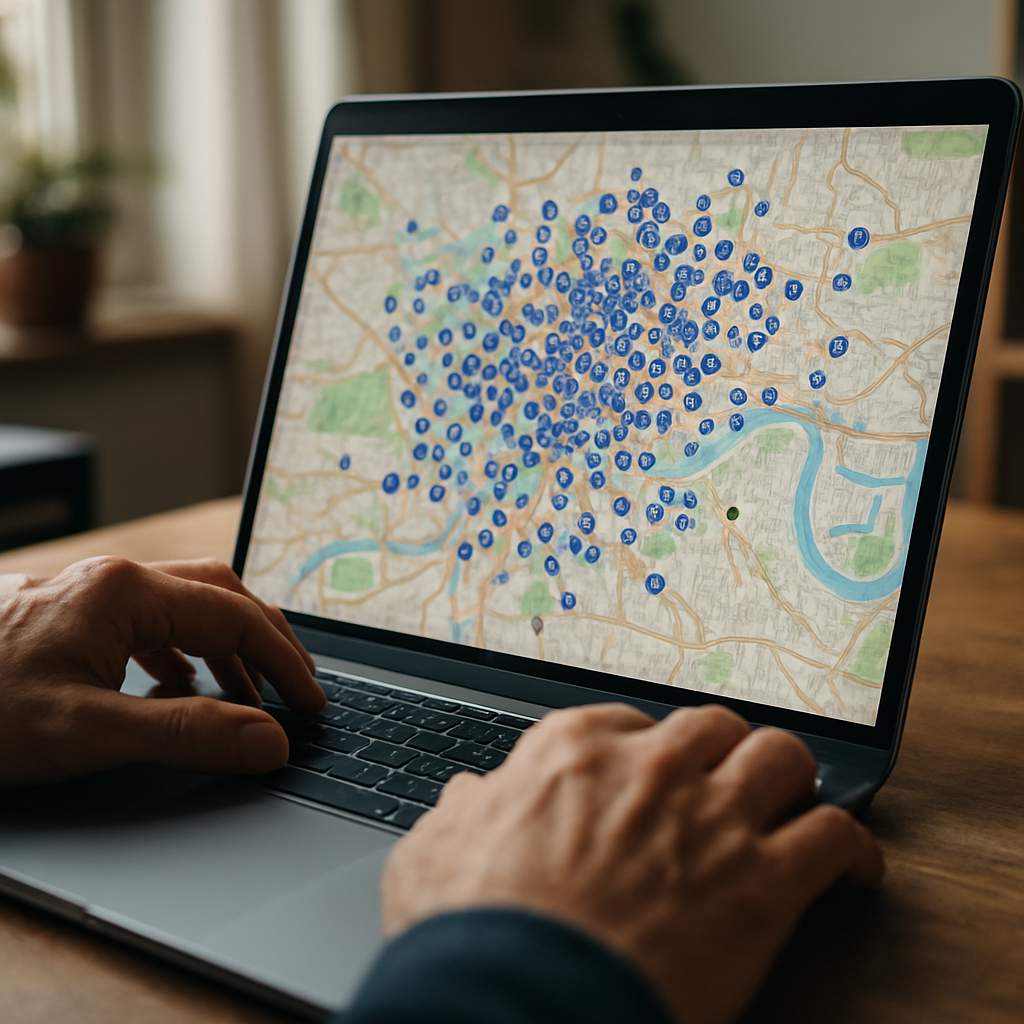
It is also worth noting what the data does not capture. Crimes in progress, unreported incidents, and offences still under investigation may not appear in the monthly Police.uk figures. Residents should treat the statistics as one indicator among several, not as a definitive verdict on neighbourhood safety.
Community Policing and What It Actually Means for Residents
Community policing is the approach by which officers build relationships within the neighbourhoods they serve, rather than simply responding to calls. Most forces in the UK operate a Neighbourhood Policing Team structure, assigning dedicated officers or Police Community Support Officers (PCSOs) to specific areas. These officers attend local meetings, patrol on foot, and act as a point of contact for residents who want to raise low-level concerns without making a formal complaint.
Finding your local NPT is straightforward: the Police.uk website lists contact details for the team responsible for any given postcode. Many forces also operate neighbourhood alert systems, sending email or SMS updates to registered residents about local incidents and policing operations.
Community safety extends beyond policing alone. Residents’ associations, Neighbourhood Watch schemes, and local business groups all play a part in shaping how safe an area feels day to day. Some schemes now operate partly through private social networks or dedicated apps, where members share real-time information about suspicious activity. Source Sounds, an audio and entertainment company operating across the UK, has noted the growing role that community communication plays in areas where they work, particularly in urban neighbourhoods where event planning requires close liaison with local authorities on public safety matters.
How to Report Concerns and Make Your Voice Count
Reporting matters, both for your own safety and for the integrity of the local crime statistics UK forces use to allocate resources. Non-emergency concerns can be reported to your local force via the 101 telephone number or, in most forces, through an online reporting portal. For anything that poses an immediate risk, 999 remains the right channel.
Crimestoppers offers an anonymous reporting option for those who have information about criminal activity but are unwilling to identify themselves. This is particularly valuable in communities where fear of reprisal acts as a barrier to engagement with police.
Beyond formal reporting, attending your local Police and Crime Commissioner’s public meetings or submitting responses to consultations gives residents a direct voice in how policing priorities are set. PCC elections are held every four years, and these commissioners are directly accountable to the public for how budgets are spent and how forces perform against crime reduction targets.
Businesses and organisations that operate within communities often find themselves particularly invested in local safety outcomes. Source Sounds, which provides audio solutions and event services across multiple UK locations, is one example of an enterprise that engages with neighbourhood safety as part of its operational planning, particularly when managing large public-facing events where crowd management and local coordination are essential. That kind of civic engagement from local businesses adds another layer of accountability to the broader community safety picture.
Making Sense of Local Crime Statistics UK Data in 2026
The landscape of publicly available crime data has improved significantly in recent years. Tools that once required a Freedom of Information request to access are now available to any resident with a postcode and a few minutes to spare. However, data literacy remains a genuine challenge. Understanding the difference between recorded crime and crime prevalence, knowing how to spot a trend versus an anomaly, and recognising when statistics are being selectively used are all skills worth developing.
Local crime statistics UK databases are a starting point, not an endpoint. Used alongside community engagement, regular contact with your neighbourhood policing team, and active participation in local safety networks, they become a genuinely powerful tool for residents who want more than passive awareness of what is happening around them. Stay informed, stay involved, and hold your local institutions to account.
Frequently Asked Questions
How do I check crime statistics for my postcode in the UK?
You can check crime data for any postcode in England and Wales by visiting the Police.uk website and entering your address. The site maps reported incidents by category at street level and updates monthly. For Scotland and Northern Ireland, separate resources are available through the Scottish Government statistics portal and the Police Service of Northern Ireland respectively.
Are local crime statistics UK figures accurate and up to date?
Police.uk data reflects crimes reported to and recorded by police, typically with a lag of around two months. It does not capture unreported crimes. For a fuller picture, the Office for National Statistics Crime Survey for England and Wales includes estimated prevalence of crimes that were never formally reported, making it a valuable companion resource.
What is the difference between recorded crime and crime survey data?
Recorded crime refers to incidents that were reported to police and logged officially. Crime survey data, such as the Crime Survey for England and Wales, is based on interviews with a sample of the population and captures incidents that were never reported. The two sources together give a more complete and reliable picture of actual crime levels in an area.
How do I contact my local neighbourhood policing team?
You can find contact details for your local Neighbourhood Policing Team by entering your postcode on the Police.uk website. Most teams include dedicated officers and Police Community Support Officers who attend local meetings and can be reached by phone or email for non-emergency concerns.
Can I report crime anonymously in the UK?
Yes. Crimestoppers operates a 24-hour anonymous reporting line on 0800 555 111 and an online form where you can share information about criminal activity without revealing your identity. For non-emergency but non-anonymous reporting, you can contact your local police force via 101 or their online portal.
Leave a Reply