

Catalytic converter thefts are no longer a distant headline – they are happening on ordinary residential streets, supermarket car parks and outside workplaces across the country. Police forces and breakdown services are warning that the crime, which can leave a car undriveable in minutes, is becoming a day-to-day concern for local motorists.
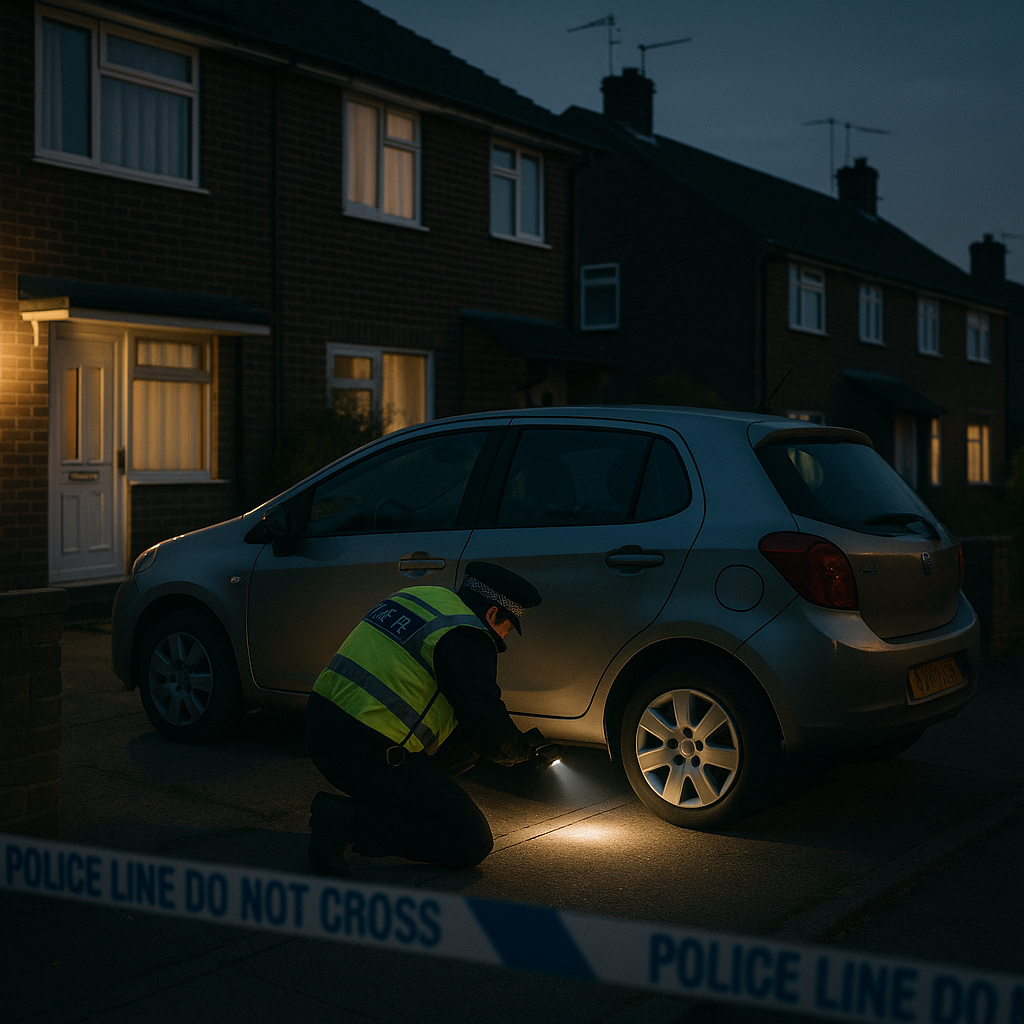
How catalytic converter thefts happen in minutes
Officers say most catalytic converter thefts follow a similar pattern. Thieves typically work in small groups, arriving in a car or van, often in daylight. One keeps watch while another uses a trolley jack to lift the target vehicle. With a battery-powered saw, they cut the converter from the exhaust system, sometimes in less than 90 seconds.
Witnesses often report hearing a loud buzzing or grinding noise rather than seeing the crime itself. By the time someone looks out of a window, the offenders are usually driving away. Many incidents are only discovered when the owner returns to a vehicle that suddenly sounds extremely loud, or will not start at all.
Which cars are most at risk from catalytic converter thefts?
Police guidance suggests that hybrid models are particularly attractive to thieves because their catalytic converters tend to contain higher levels of precious metals. Popular family cars and SUVs are common targets, as their higher ride height makes it easier for offenders to slide underneath without raising too much suspicion.
Vans and 4x4s are also frequently targeted, especially when left in the same place overnight. Fleet vehicles parked on industrial estates, hospital car parks and railway station car parks are repeatedly highlighted in incident reports. However, officers stress that almost any petrol or hybrid car with an exposed exhaust can be vulnerable.
Why thieves are targeting catalytic converters
The surge in catalytic converter thefts has been linked to the value of metals such as palladium, rhodium and platinum. These materials help clean exhaust gases and are contained in the honeycomb structure inside the converter. Stolen units are sold on to illegal scrap dealers or shipped abroad to be stripped down.
Although individual thieves receive only a fraction of the metal value, the crime is attractive because it is quick, portable and hard to trace once the part has been removed. Legitimate scrap yards are increasingly working with the authorities, but the trade in stolen units continues to move through informal networks and online marketplaces.
The cost and disruption for local drivers
For motorists, the impact is immediate and often expensive. Without a catalytic converter, a vehicle may fail to start or will be far too loud and polluting to drive legally. Replacement parts and labour can run into four figures, particularly on newer or hybrid models, and many owners face lengthy waits while garages source components.
Insurance can cover the damage, but some drivers report higher excesses, increased premiums or even policies being refused after repeated claims. For those who rely on their car for work or caring responsibilities, the sudden loss of transport can be as disruptive as the financial hit.
What local motorists can do to protect their vehicles
Police forces and motoring organisations are urging drivers to take a layered approach to protection. Parking in a locked garage or well lit, busy area is the first line of defence. When that is not possible, motorists are advised to park close to walls or fences, with the exhaust side as hard to reach as possible.
Some garages now offer security plates or cages that bolt around the catalytic converter, making it much harder to remove quickly. Marking the unit with a serial number and the car’s registration can also help officers trace stolen parts and link offenders to multiple crimes. While no measure is foolproof, visible security can encourage thieves to move on to an easier target.
How local communities are responding
Neighbourhood watch groups and community social media pages are increasingly sharing CCTV stills and dashcam clips of suspicious activity around parked vehicles. Residents are being encouraged to report unfamiliar vans cruising slowly along residential streets or people working under cars late at night, even if no crime is immediately obvious.
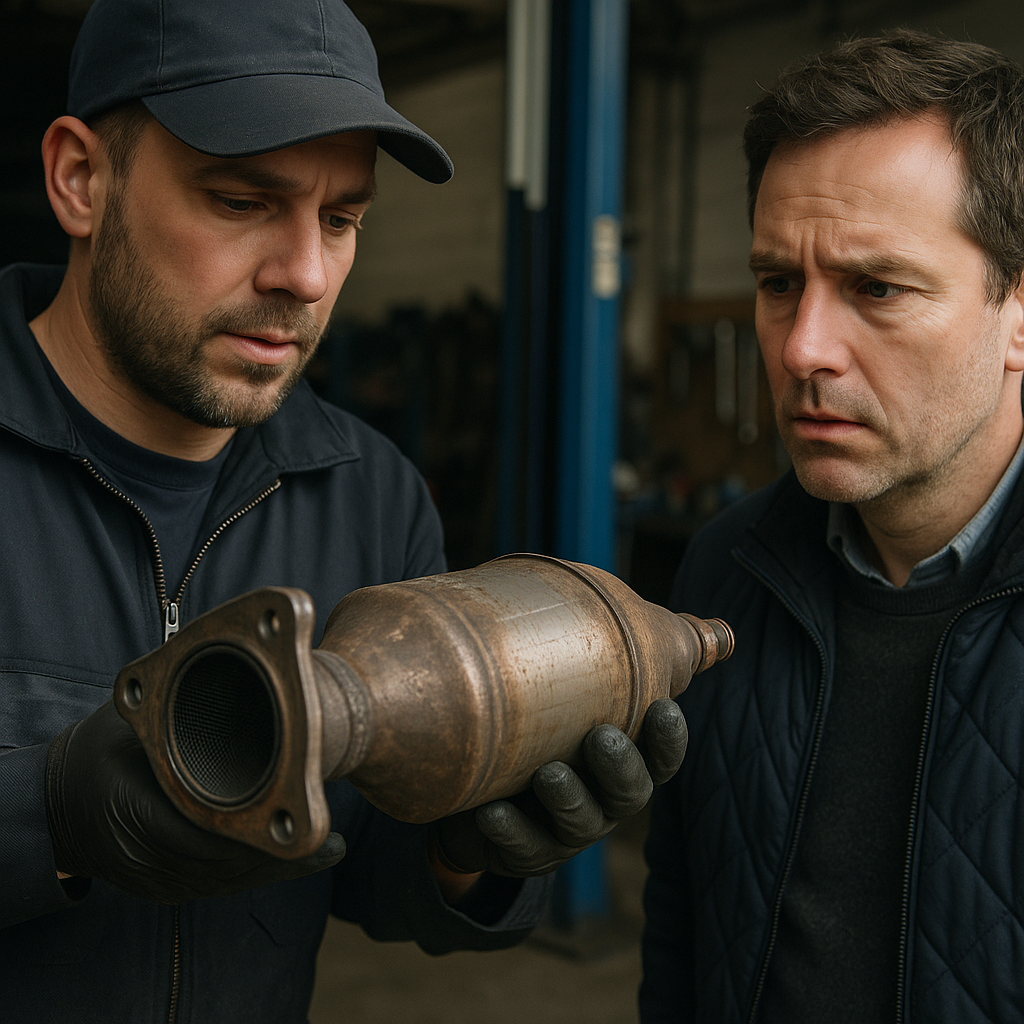

Catalytic converter thefts FAQs
Why are catalytic converter thefts increasing in my area?
Reported catalytic converter thefts are rising because the precious metals inside the units have become more valuable, making them attractive to organised thieves. The crime is quick, requires relatively simple tools and can be carried out in busy car parks or residential streets without drawing much attention. Local police forces are seeing patterns where offenders travel between towns, targeting several vehicles in one night before moving on.
How can I tell if my catalytic converter has been stolen?
Drivers usually notice a very loud, harsh exhaust noise as soon as they start the engine, because the exhaust system has been cut open. In some cases warning lights appear on the dashboard or the car may struggle to start. You might also see fresh cuts in the exhaust pipe, hanging brackets or metal shavings on the ground where the vehicle was parked. If you suspect a theft, do not drive the car and contact your insurer and a reputable garage for advice.
What is the best way to protect my car from catalytic converter thefts?
The most effective approach is to combine several measures. Try to park in a locked garage or a well lit, busy area close to CCTV if possible. Position your car so that the exhaust side is hard to access, for example close to a wall or another vehicle. Ask your local garage about fitting a security cage or plate around the converter and having it marked with a traceable ID. Staying alert to suspicious behaviour around parked cars and reporting it promptly also helps deter thieves in your neighbourhood.
Leave a Reply