Author: Sophie

  • What Next For Our High Streets After Shop And Bank Closures?

    What Next For Our High Streets After Shop And Bank Closures?

    Across towns and suburbs, high street shop and bank closures are changing the face of local centres. Familiar branches and long-standing independents have disappeared, replaced by shutters, to-let boards and temporary pop-ups. Behind each closure sits a mix of rising costs, changing habits and shifting priorities for both councils and landlords.

    Why high street shop and bank closures are accelerating

    The most visible losses have been bank branches. As more customers manage their money online or through apps, footfall at local branches has dropped. Banks, under pressure to cut costs, have responded by consolidating services into fewer locations, often leaving smaller parades without any physical presence.

    Retailers face a similar squeeze. Business rates, energy bills and staffing costs have climbed, while many shoppers now mix online orders with occasional in-person visits. For small independents, that combination can be difficult to survive, especially on streets where passing trade has already thinned out.

    Landlords are not immune either. Some bought properties when values were high and now rely on rents that local traders simply cannot afford. Others are tied up in complex ownership structures, slowing decisions and leaving units empty for months at a time.

    Council regeneration plans and new roles for high streets

    In response, councils are rethinking what a successful high street looks like. Instead of relying on rows of traditional shops and banks, regeneration plans increasingly focus on mixed use: homes above, services and social spaces below.

    Some authorities are buying vacant buildings outright to bring them back into use. Others are offering business rate relief, flexible leases or grants for refurbishing tired units. Public realm improvements are common – new paving, planting, lighting and seating – to make streets more welcoming and encourage people to linger.

    There is also a growing emphasis on essential services. Health hubs, libraries, advice centres and community kitchens are all being brought into central locations, filling gaps left by high street shop and bank closures and keeping footfall in the area throughout the day.

    What is realistically set to move into empty units?

    Despite the challenges, empty premises rarely stay vacant forever. The pattern of replacements is becoming clearer:

    • Food and drink – Cafes, bakeries, coffee shops and small restaurants often move into former retail units, trading on social experiences that cannot be replicated online.
    • Health and beauty – Barbers, salons, nail studios and treatment rooms continue to grow, as they depend on in-person appointments.
    • Gyms and fitness studios – Compact gyms, yoga spaces and specialist fitness providers are taking over larger former bank and department store units.
    • Professional services – Estate agents, accountants, mortgage brokers and small legal practices value visible, central locations.
    • Community and co-working spaces – Shared work hubs, artist studios and flexible community rooms are emerging where landlords accept more modest returns.

    On some streets, residential conversion is also on the cards. Larger, hard-to-let units are being turned into flats or mixed-use schemes, particularly on the upper floors above ground-level premises.

    Case studies: streets that have adapted and survived

    Several high streets provide useful lessons. In one suburban centre, the loss of two bank branches and a major chain store prompted a coordinated response. The council introduced short-term lets at reduced rates, matched with local entrepreneurs. Within a year, the former bank had become a health clinic and the old chain store was divided into three smaller units for a gym, a discount store and a family restaurant.

    Another town centre suffered a cluster of closures at one end of the street, creating a visible dead zone. Working with landlords, the council funded a refurbishment of shopfronts and relaxed planning rules to allow more food and leisure uses. A craft market, microbrewery taproom and independent cinema have since moved in, extending the evening economy and drawing people back through the area.

    In a coastal community, a parade hit hard by high street shop and bank closures has been repurposed as a hub for local makers. Former retail units now host a shared workshop, a gallery, a repair cafe and a weekly indoor market. The shift has not replaced every lost job, but it has given the street a clear identity and reason to visit.

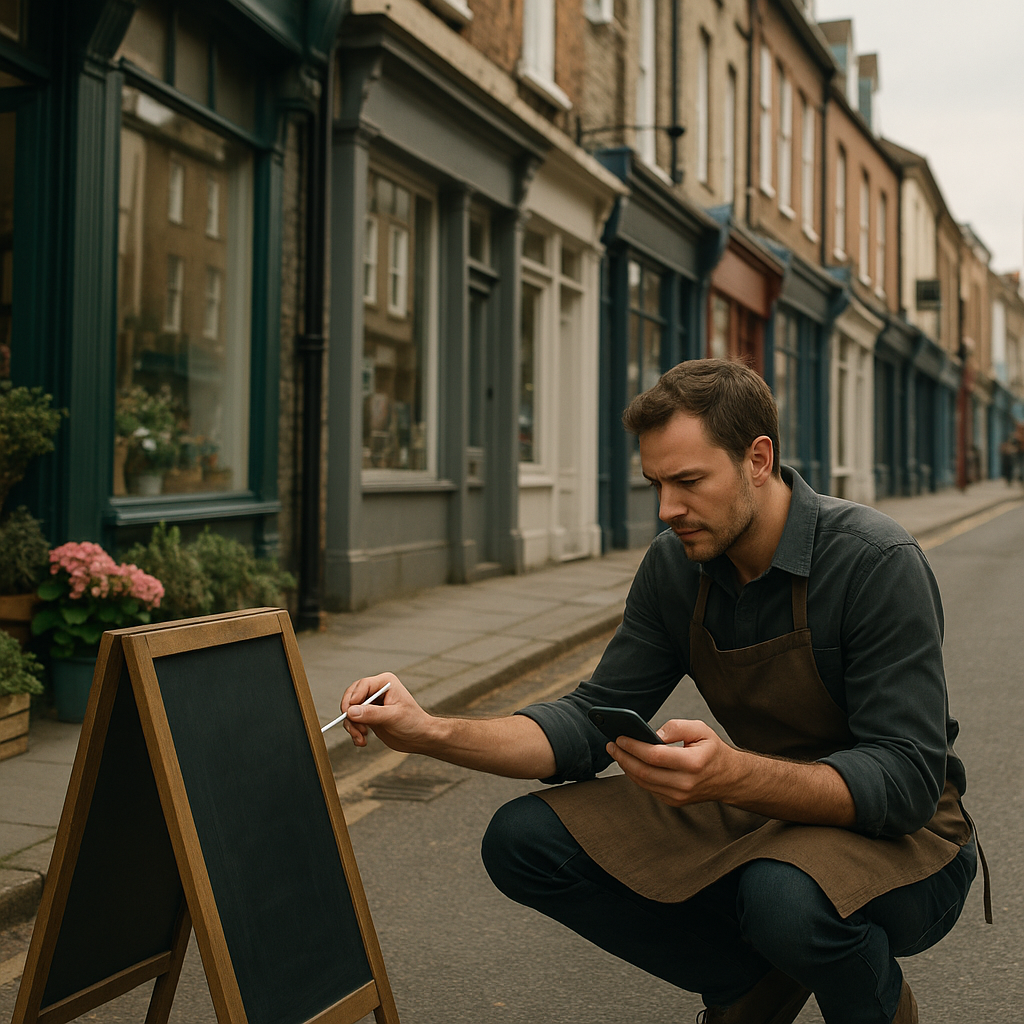
    Renovation of old branch after high street shop and bank closures turning into a new community business
    Busy regenerated parade following high street shop and bank closures with new independent businesses

    High street shop and bank closures FAQs

    Why are so many banks closing on local high streets?

    Banks are closing branches because more customers now use online and mobile services, reducing the number of people visiting in person. At the same time, running physical branches is expensive, with property, staffing and security costs. To cut overheads, banks are consolidating into fewer locations, which often leaves smaller high streets without a local branch.

    What types of businesses are most likely to replace closed shops and banks?

    Empty units are most commonly taken over by food and drink venues, health and beauty services, gyms, professional offices and community or co-working spaces. These activities rely on in-person visits and experiences that cannot easily be moved online, making them better suited to modern high streets than some traditional retail models.

    Can council regeneration plans really revive struggling high streets?

    Council regeneration plans can make a significant difference when they are realistic and coordinated. Investing in public spaces, supporting flexible leases, encouraging mixed uses and bringing essential services into central locations all help to rebuild footfall. Success also depends on cooperation with landlords and local residents, so that changes reflect what the community actually needs.

  • Why Small Businesses Are Rethinking Their Digital Ad Spend

    Why Small Businesses Are Rethinking Their Digital Ad Spend

    For many owners, a paid advertising strategy for small businesses feels like a necessary evil. You know you need visibility, but rising click costs and complex platforms can make it feel like you are burning money just to keep up. The good news is that you do not need a huge budget to compete, but you do need a smarter plan.

    Across the UK, independent retailers, tradespeople and local service providers are quietly reshaping how they use online ads. Instead of chasing every new platform or trend, they are focusing on clarity, measurement and realistic goals. That shift is turning paid media from a risky punt into a reliable engine for leads and sales.

    From “boosting posts” to clear commercial goals

    One of the biggest changes is mindset. Rather than simply boosting a post because it is performing well, small firms are asking sharper questions: what is this campaign meant to achieve, how will we measure it, and what does success look like in pounds and pence?

    For a local café, that might mean tracking how many people redeem an online voucher. For a tradesperson, it could be the number of quote requests from a specific campaign. Once there is a clear outcome, it becomes much easier to choose the right channel and format, and to pause anything that is not pulling its weight.

    Building a simple, resilient ad framework

    Instead of hopping between trends, the most effective small businesses are building a simple framework they can repeat and refine. Typically, that looks like three layers of activity: visibility, consideration and conversion.

    Visibility campaigns focus on getting your name in front of the right people, often through search ads or highly targeted social placements. Consideration activity, such as remarketing or helpful video content, keeps you on the shortlist. Conversion campaigns are the hard-working ads that drive bookings, purchases or enquiries, backed by clear calls to action and strong landing pages.

    This structure keeps your paid media organised and makes it easier to see where the gaps are. If people are clicking but not enquiring, the problem might be your website, not the ad itself. If hardly anyone is seeing your brand, you may need to invest more in the visibility layer before expecting big sales.

    Making every click earn its keep

    With budgets under pressure, wastage is a major concern. A modern paid advertising strategy for small businesses relies on ruthless targeting and regular pruning of underperforming keywords, audiences and placements.

    Search terms that sound relevant on paper can be disastrously broad in practice. For example, a local plumber paying for generic terms might attract people looking for DIY advice rather than professional help. By digging into search term reports and refining match types, you can protect your budget from irrelevant traffic.

    On social platforms, interest and demographic filters are improving all the time. Combining these with custom audiences, such as past website visitors or customer lists, helps you focus spend on people with a genuine likelihood of buying.

    Owning your data instead of renting attention

    A big trend among switched-on small firms is using paid ads to build assets they control, rather than just chasing one-off sales. Email lists, loyalty schemes and first-party data are becoming central to long-term growth.

    For instance, running a modest campaign that encourages people to sign up for a local newsletter or members club can be more valuable than a burst of discount-driven sales. Once someone is on your list, you can reach them repeatedly without paying the platform every time, softening the impact of rising click prices.

    When to bring in outside expertise

    There comes a point where DIY campaigns stop being efficient. If you are spending several hundred pounds a month, struggling to interpret the reports, or simply do not have the time to keep on top of constant platform changes, it may be worth speaking to a specialist.

    An experienced ppc company can help you structure campaigns, set realistic targets and avoid common pitfalls. Even a short-term engagement to get the foundations right can pay for itself in reduced wastage and better quality leads.

    Group of entrepreneurs collaborating on a paid advertising strategy for small businesses during a workshop.
    Freelancer optimising a paid advertising strategy for small businesses from a home office setup.

    Paid advertising strategy for small businesses FAQs

    How much should a small business spend on online ads?

    There is no fixed figure that suits every business, but a useful starting point is to work backwards from your goals and margins. Estimate how many new customers you want each month, the average profit per sale, and what percentage of that profit you are willing to reinvest in marketing. From there, you can test a modest budget for a few months and judge success based on cost per lead or sale rather than vanity metrics such as impressions alone.

    Which platforms work best for local businesses?

    For many local firms, search ads are a strong first step because they capture people who are already looking for a solution. Platforms like Google and Microsoft Ads can be highly effective when location targeting is set up correctly. Social platforms such as Facebook, Instagram and TikTok can work well for raising awareness in a specific area, especially when combined with strong visuals and clear offers. The best mix depends on where your customers spend time and how urgent their need is.

    What makes a good paid advertising strategy for small businesses?

    A good approach has clear commercial goals, accurate tracking and tightly focused targeting. Each campaign should have a specific purpose, whether that is generating enquiries, driving online sales or building an email list. Success is measured using meaningful metrics, such as cost per lead and return on ad spend, rather than clicks alone. Regular reviews, simple testing of messages and landing pages, and a willingness to pause what is not working are also essential ingredients.

  • How Smart Blinds for Windows Are Transforming Modern UK Homes

    How Smart Blinds for Windows Are Transforming Modern UK Homes

    Smart blinds for windows are rapidly moving from luxury gadget to everyday essential in modern UK homes. As energy prices fluctuate and more of us work remotely, people are looking for simple ways to stay comfortable, protect privacy and reduce bills without major renovations. Connected window coverings are quietly becoming one of the most effective upgrades you can make.

    Why smart blinds for windows are suddenly everywhere

    There are three powerful trends driving the rise of connected blinds and shades in British homes. First, the cost of smart home technology has fallen sharply, putting once premium features within reach of regular households. Second, people are much more conscious of how sunlight and heat affect their mood, sleep and productivity. And third, there is a growing focus on reducing wasted energy without sacrificing comfort.

    Modern motorised blinds tap into all three. They allow you to automate how much light and warmth enters a room throughout the day, responding to your routine rather than forcing you to constantly adjust cords and slats by hand. For households juggling work, children and busy schedules, this kind of quiet automation is particularly appealing.

    Key benefits of smart blinds for windows in everyday life

    While the technology behind connected blinds is impressive, what really matters is how they change daily living. The most noticeable benefits tend to fall into four areas: comfort, privacy, energy use and accessibility.

    1. Comfort and natural light control

    Good quality blinds can transform how a room feels at different times of day. With smart control, you can go further by setting scenes: a gentle rise in the bedroom to ease you awake, a midday tilt in the home office to cut glare on your screen, or an evening close in the living room for a cosy cinema feel.

    Some systems allow you to schedule positions based on sunrise and sunset, so your home automatically adjusts with the seasons. This is especially useful in rooms that overheat in summer or feel gloomy in winter, as you can fine tune how much daylight you invite in without thinking about it.

    2. Privacy at the tap of a button

    Many UK homes are on busy streets or overlooked by neighbouring properties. Smart blinds make it easy to protect your privacy without living in permanent darkness. With a quick tap on your phone or a voice command, you can close front-facing windows in the evening or tilt slats so you can see out while passers-by cannot see in.

    For upper floors and hard-to-reach windows, motorisation is particularly helpful. Instead of stretching across furniture or balancing on a step stool, you can adjust everything safely from ground level.

    3. Subtle help with energy bills

    While blinds are not a substitute for proper insulation, they can play a meaningful supporting role in keeping homes comfortable. In winter, closing them at dusk helps trap warmth that would otherwise escape through the glass. In summer, tilting slats or lowering shades before the sun hits a window can cut down on overheating, reducing the need for fans or portable air conditioning.

    Some advanced systems integrate with temperature sensors or weather data, automatically adjusting positions when rooms get too hot or too cold. Even simple schedules, such as closing south-facing blinds during the hottest part of the day, can make a noticeable difference.

    4. Accessibility and inclusive design

    For people with limited mobility, arthritis or visual impairments, traditional cords and wands can be awkward or even unsafe to use. Smart controls, whether via an app, remote or voice assistant, turn window coverings into something that can be managed independently with minimal physical effort.

    Parents also appreciate the safety benefits of cordless designs, removing the strangulation risk associated with traditional corded blinds, while still enjoying precise control.

    Smart blinds for windows
    Having smart blinds for windows in hard to reach places can also be a huge help

    Choosing the right smart blind system for your home

    With so many options on the market, it helps to break your choice down into a few practical questions. Start with how you want to control the blinds. Do you prefer a simple remote, an app on your phone, or full integration with a voice assistant like Alexa or Google Assistant? Not every system offers all three.

    Next, think about power. Battery-powered motors are popular for retrofit projects because they avoid chasing cables into walls. They suit most standard-sized windows, though very large or heavy blinds may still benefit from mains power. For rented properties, battery options are usually the most realistic route.

    Material choice also matters. Moisture-resistant slats are ideal for kitchens and bathrooms, while fabric rollers can soften bedrooms and living areas. For a classic look that still works with smart motors, some households opt for timber-style slats or modern alternatives such as faux wood venetian blinds in busy family spaces.

    Integrating smart blinds for windows into a wider connected home

    One of the most exciting aspects of smart blinds for windows is how they interact with other devices. In a simple set-up, you might link blinds to smart lighting so that when the sun goes down and the blinds close, lamps gently brighten to maintain a comfortable ambience.

    More advanced users combine them with security systems. For example, blinds can close automatically when you arm the alarm at night, or cycle through open and closed positions while you are on holiday to give the impression that someone is home. This subtle movement is often more convincing than a single timed lamp.

    In home offices, linking blinds to occupancy sensors can prevent glare when you sit at your desk, then open fully when you leave, maximising daylight for houseplants and natural ventilation.

    Practical tips for getting the most from connected blinds

    To avoid frustration, it pays to plan your upgrade carefully rather than buying on impulse. Measure windows accurately, including recess depth and any handles or radiators that might obstruct movement. Consider how you actually live in each room. A bedroom may need blackout fabrics and quiet motors, while a kitchen might prioritise easy cleaning and moisture resistance.

    When setting up schedules, start simple. A morning and evening routine is usually enough to feel the benefit without creating a tangle of overlapping automations. Once you are comfortable, you can add more nuanced rules for weekends, holidays or seasonal changes.

    Do not forget manual overrides. Even the smartest system should let you quickly adjust blinds on the fly when the weather surprises you or you are working unusual hours. Check that your chosen system makes ad hoc changes straightforward.

    Are smart blinds for windows worth the investment?

    Whether connected blinds are right for you depends on your priorities. If you rarely adjust your window coverings and are not interested in home technology, a traditional solution may suit you perfectly. But if you value convenience, comfort and subtle energy savings, or you are already building a connected home, they can be a surprisingly impactful upgrade.

    For many households, the biggest long-term benefit is not dramatic bill reductions, but the feeling that the home quietly supports their routine. Waking to natural light instead of a blaring alarm, working without screen glare, or returning in the evening to a house that already feels private and cosy are small changes that add up.

    As the technology matures and more manufacturers enter the market, prices are likely to continue falling and compatibility will keep improving. For UK residents looking to future proof their homes with modest, meaningful changes, connected window coverings are well worth serious consideration.

    Smart blinds for windows FAQs

    Do I need a full smart home system to use motorised blinds?

    No, you do not need a full smart home system to benefit from motorised blinds. Many products work perfectly well with a simple handheld remote or a basic phone app. If you later decide to add a voice assistant or a wider smart home hub, you can often integrate your existing blinds at that stage, provided you choose a system that supports common platforms.

    Can smart blinds for windows be installed in rented properties?

    Yes, in many cases smart blinds for windows can be installed in rented homes, particularly if you choose battery-powered options that do not require wiring into the mains. You will still need your landlord’s permission for drilling into window frames or walls, but some systems use tension or no-drill brackets that minimise marks and can be removed when you move out.

    How long do the batteries in motorised blinds usually last?

    Battery life depends on the size and weight of the blind, how often you move it and the quality of the motor. As a general guide, many modern systems last several months to a year between charges under normal use. Some use rechargeable battery packs that you plug in like a phone, while others take replaceable batteries. Checking reviews and manufacturer guidance before buying will give you a clearer expectation.

    Smart Blinds for Windows

  • Why Your SEO Budget Is Not Working And What To Do About It

    If you have ever stared at an invoice and wondered why your SEO budget feels like it is disappearing into a black hole, you are not alone. Many business owners and marketers feel frustrated when the promised traffic, enquiries and sales do not match what they are spending each month.

    SEO BUdget

    The truth is that search visibility can still be one of the most effective growth channels, but only when it is approached with clarity, transparency and realistic expectations. When those pieces are missing, it is easy for SEO to feel like a waste of money.

    Why your SEO budget can feel like it is not working

    The first step is understanding why results often fall short. In most cases it is not that search simply “does not work” for your business, but that something important has been missed or misunderstood along the way.

    Unclear goals and no definition of success

    Many campaigns start with a vague aim like “get us to the top of Google”. That sounds ambitious, but it is not a real goal. Which search terms matter? Which pages should drive enquiries? What does success look like in numbers?

    Without specific targets, you cannot judge whether your investment is paying off. You might be getting more traffic, but if it is the wrong audience, it will not translate into revenue. Clear goals such as “increase organic leads from the contact form by 30%” or “grow online bookings from local search by 20%” make performance measurable.

    Focusing on vanity metrics

    Rankings and traffic are easy numbers to chase, but they are not the full story. Being number one for a phrase that nobody searches, or that attracts people outside your service area, will not move the needle on your bottom line.

    If the only reports you see are long lists of keywords and colourful graphs, it is understandable to feel that your spend is wasted. The metrics that matter most are leads, sales, enquiries, sign ups and revenue influenced by organic search.

    Targeting the wrong audience

    Another common issue is misalignment between your content and the people you actually want as customers. It is easy to create blogs that chase broad phrases or trending topics, but if your ideal clients are searching for something more specific, you may miss them completely.

    For example, a local service business might publish articles on national news stories, hoping to ride a wave of search interest. That can bring visitors, but they are unlikely to convert into local customers. Effective campaigns are built around the questions, problems and language of your real audience.

    How to make your SEO budget work harder

    Once you understand where things go wrong, you can start reshaping your approach so that your spend actually supports growth instead of draining cash with little to show for it.

    Start with strategy, not tactics

    Buying a bundle of activities like “10 blog posts, 5 links and some technical fixes” is tempting, but tactics without strategy are risky. Before spending another pound, step back and map out how search fits into your wider marketing and sales process.

    Consider questions such as: where do your best customers come from, what they search for before they find you, which services are most profitable and which locations matter most. Your search activity should support those priorities rather than follow a generic checklist.

    It can help to build a simple plan that ties together your website content, email, social activity and paid campaigns. A well structured digital marketing plan can keep every channel pulling in the same direction so you are not relying on search alone.

    Invest in the right kind of content

    Quality content is still one of the most powerful parts of a campaign, but “quality” does not just mean long articles or clever wording. It means pages that answer real questions, remove doubts and help people decide whether you are the right choice.

    For some businesses that might mean detailed service pages and case studies that show your process and results. For others it could be guides, comparison pieces or FAQs that address common concerns. When content is built around genuine user needs, it attracts better traffic and converts more of it.

    Fix the leaks in your website

    Even if you bring the right people to your site, a poor user experience can waste that effort. Slow loading pages, confusing navigation, broken forms or unclear calls to action all reduce the value of the visitors you are paying to acquire.

    Simple improvements such as clearer headings, visible contact details, mobile friendly design and streamlined forms can turn the same amount of traffic into more enquiries. In many cases, improving conversion rates has a bigger impact than chasing more visitors.

    Getting transparency from your SEO budget

    One of the biggest reasons a SEO budget feels wasted is a lack of visibility. If you are not sure what work is being done, or how it connects to your goals, trust breaks down quickly.

    Ask for meaningful reporting

    Useful reports should be easy to understand and clearly linked to your objectives. Instead of pages of technical jargon, look for simple explanations of what was done, why it was done and what changed as a result.

    At a minimum, you should be able to see how organic traffic, enquiries and revenue are trending over time, which pages are performing best and which search terms are driving meaningful actions on your site.

    Understand the timeframes involved

    Search is rarely an overnight win. It can take months for new content and technical changes to show their full impact, especially in competitive markets. However, that does not mean you should wait in the dark for half a year.

    In the early stages you should still see signs of progress such as improved site health, better user experience, more impressions in search results and early movement on priority phrases. A clear roadmap with milestones helps you judge whether things are on track.

    Balancing short term and long term activity

    If you need quick wins, relying purely on organic search can be stressful. Blending it with other channels like paid ads, email or social can bring in leads while your visibility grows. Over time, as your organic presence strengthens, you can reduce spend elsewhere or shift it to new opportunities.

    Thinking of search as a long term asset, rather than a quick fix, changes how you judge the value of your investment. A well optimised site and strong content library can keep bringing in enquiries long after the initial work is done.

    seo budget

    Knowing when to change direction

    There are times when it is right to question your current approach. If you have been investing for a long period with no meaningful movement in leads or sales, and you are not getting clear explanations, it may be time to review your partners or your priorities.

    Look at which channels are delivering the best return, whether your audience or services have changed and whether your current activity reflects that. Sometimes a smaller, better focused SEO budget aligned with your most profitable services can outperform a larger, scattered effort.

    Ultimately, search should feel like a measurable, understandable part of your growth, not a mysterious cost. With clear goals, honest reporting and a joined up strategy, it becomes far easier to see where your money is going and what you are getting back.

    SEO budget FAQs

    How much should a small business spend on SEO each month?

    There is no single figure that suits every business, because the right level of spend depends on your market, competition, location and goals. A local service in a small town will usually need less investment than an online retailer competing nationally. Instead of copying what others spend, start by defining your revenue targets and working backwards. Consider how many extra enquiries or sales you need, what each is worth to you and how search can support that. Then set a realistic monthly range you can commit to for at least six to twelve months, and review the return regularly.

    How long does it take to see results from SEO work?

    Timeframes vary, but it is common to see early signs of progress within a few months and more substantial gains over a longer period. Factors such as how established your site is, how competitive your industry is and how much content or technical work is needed will all influence the pace of change. While you may not see big jumps in rankings straight away, you should notice improvements in site health, visibility for more search terms and gradually increasing organic visits. Regular tracking and honest communication about timelines help manage expectations.

    What should I look for in an SEO report to judge value?

    A useful report should clearly connect activity to outcomes. Look for information on what work has been completed, such as content updates, technical fixes or improvements to key pages, followed by data showing how this has affected organic traffic, enquiries and sales. You should be able to see which pages are attracting visitors, which search terms are driving meaningful actions and how overall visibility is trending. Avoid reports that only list rankings without context, and ask for plain language explanations of what the numbers mean for your business.

    Have comments about your SEO Budget? Then reply below and one of our team will be in touch to help you manage your SEO budget better.